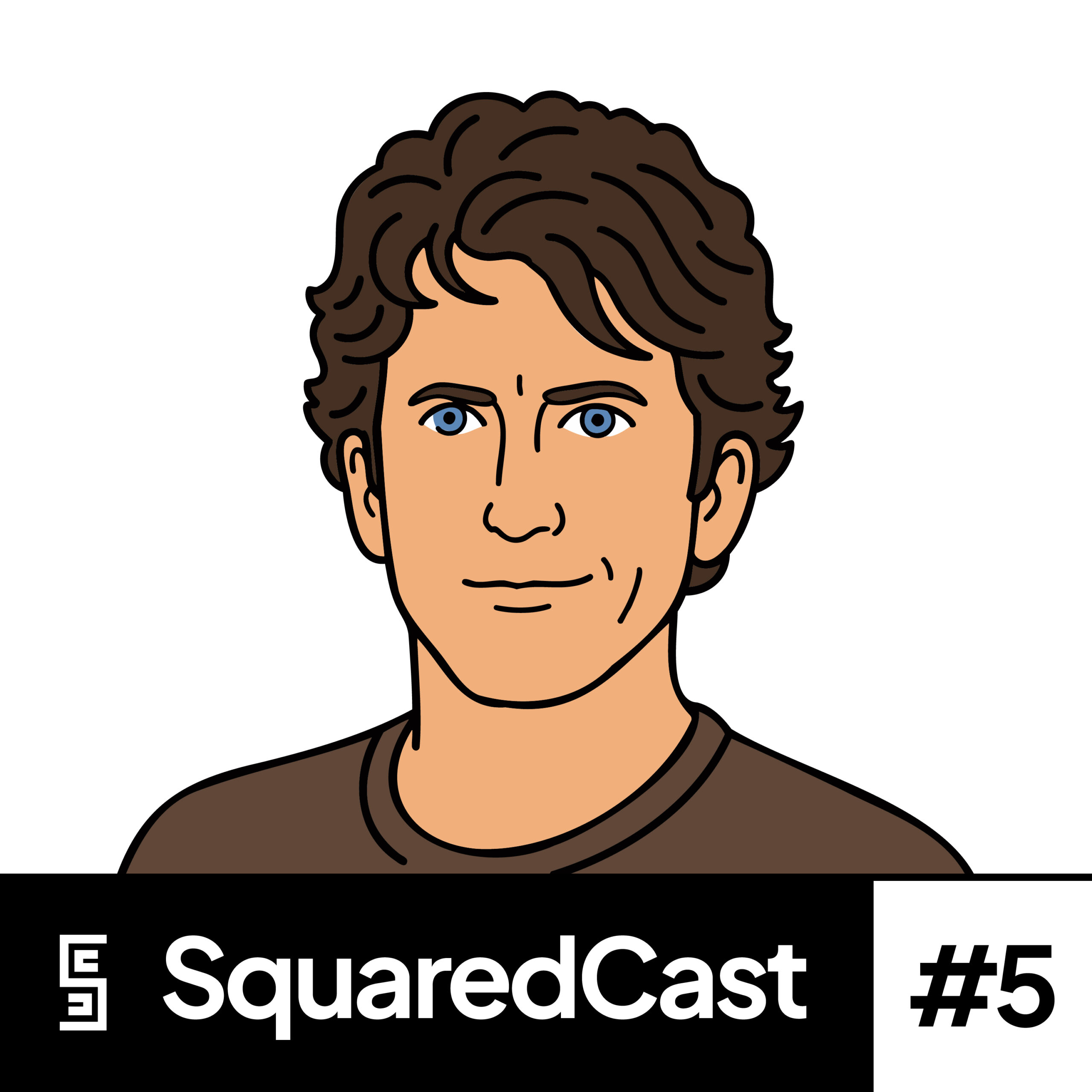
a.k.a. “Todd’s Sweet Little Lies”
From the studio that brought you Skyrim, Skyrim: Legendary Edition, Skyrim: Special Edition, Skyrim VR, Skyrim for Nintendo Switch, Skyrim: Very Special Edition for Amazon Alexa, Skyrim: Anniversary Edition, and Skyrim for Switch 2…
We bring you a special episode tracing Bethesda’s full arc from the golden age of Morrowind through the Fallout 76 dumpster fire, Starfield’s 97.6% player decline, and the belated PS5 relaunch with the Free Lanes update that should have shipped in 2023. We dig into the Creation Engine debate, Todd Howard’s pattern of overpromising, Microsoft’s layoffs gutting ZeniMax, and TES VI sitting at 14+ years post-Skyrim with no release date. Meanwhile, Elden Ring and Baldur’s Gate 3 proved the audience Bethesda built isn’t gone. It just has better options now.
Timestamps
- 0:00 – Intro
- 1:47 – The Golden Age (1)
- 9:47 – The Cracks Appear (2)
- 18:07 – The Dumpster Fire (3)
- 32:37 – Starfield (4)
- 45:21 – Let Creation Engine Die… PLEASE (5)
- 55:37 – The Culture Problem (6)
- 1:04:22 – Can They Come Back? (7)
- 1:17:28 – Outro + Housekeeping
Topics Covered
- Bethesda’s golden age: Morrowind (89 Metacritic, 4M+ copies), Oblivion (94 Metacritic, horse armor as the original microtransaction controversy), Fallout 3 (91 PC / 93 Xbox 360 Metacritic, $300M revenue), and Skyrim (96 Metacritic, 60M+ lifetime sales, 6.1 billion mod downloads)
- The cracks appear: a decade of Skyrim re-releases, Fallout 4’s “good game, bad RPG” problem, the four-option dialogue wheel backlash, and Howard taking ten years to acknowledge the system failed
- Fallout 76: Metacritic scores in the 49-53 range, canvas bag fraud, Nuka Dark rum scam, support site data breach, price collapse from $60 to $35 in 11 days, refund denials prompting a law firm investigation, AngryJoe’s 3/10 review, and the Fallout 1st subscription launching with recycled servers and item-deleting scrap boxes
- Wastelanders update as partial redemption; Microsoft’s $7.5 billion acquisition of ZeniMax
- Starfield: 330,723 peak concurrent on Steam at launch, down 97.6% to ~3,500 by March 2026; Shattered Space DLC scoring 54 on Metacritic; Howard saying “it is not Starfield 2.0”
- PS5 launch on April 7, 2026 with the Free Lanes update finally adding interplanetary flight; PlayStation Store rating of 9.14/10; Steam concurrent players surging to 21,000 (highest since September 2024) but still a fraction of launch numbers
- The Creation Engine debate: cell-based architecture causing loading screen dependency, Free Lanes as a workaround rather than a fix, former dev Nate Purkeypile arguing for Unreal Engine 5, Bruce Nesmith warning an engine switch would devastate the modding ecosystem, Howard confirming Creation Engine 3 for TES VI
- The culture problem: Howard’s history of overpromising (“it just works,” “sixteen times the detail,” “200 endings”), the paid mods controversy (2015 Steam Workshop backlash, Creation Club, Starfield “Creations”), Pete Hines’ departure, and The Elder Scrolls VI at 14+ years post-Skyrim with no release date
- The Fallout TV series (65M viewers in 16 days, 93% Rotten Tomatoes Season 1, 17 Emmy nominations) reviving player counts across all Fallout titles; Oblivion Remastered shadow drop drawing 9M players in three months
- Microsoft layoffs gutting ZeniMax: Arkane Austin and Tango Gameworks shut down (May 2024), 194 workers cut at ZeniMax Rockville (July 2025)
- Competition: Elden Ring (30M+ copies, 96 Metacritic) and Baldur’s Gate 3 (20M+ copies, 96 Metacritic, more than 2.5 times Starfield’s Steam peak) proving the RPG audience is growing while Bethesda stalls
No Rundown, no Build Log, no Plug this time. Just 100% pure Bethesda. 🙂
Other Links
- Patreon: https://www.patreon.com/SquaredCast
- Website: https://squaredcast.com
Transcript
Toggle Transcript Visibility
IMPORTANT DISCLAIMER: Transcripts are auto-generated and may contain inaccuracies or differ from the spoken content.
Welcome back to SquaredCast. This is a special episode, recorded on April 10th, 2026.
This week: a special deep-dive episode dedicated entirely to Bethesda Game Studios. We trace the full arc from the golden age of Morrowind through Skyrim, into the catastrophic Fallout 76 launch and its parade of controversies, and through Starfield’s 97% Steam player decline and belated PS5 relaunch with the Free Lanes update that should have shipped in 2023. We dig into the Creation Engine debate, Todd Howard’s long pattern of overpromising, Microsoft’s layoffs gutting ZeniMax, and The Elder Scrolls VI sitting at 14 years post-Skyrim with no release date. Meanwhile, Elden Ring and Baldur’s Gate 3 have proven the audience Bethesda built isn’t gone. It just has better options now.
As always, show notes and sources are at squaredcast.com. If you want to support us and get bonus content, our Patreon starts at two bucks a month. Links in the show notes. Let’s get into it.
I’m sure most people listening have heard of Bethesda, or at least a game they’ve made. A few off the top of my head: Oblivion, Skyrim, many of the Fallout games. The ones I’ve personally played all the way through multiple times are Skyrim and Fallout 4 — once on PS4, then again on PC. I’ve played Oblivion. I’ve played a little bit of Fallout 3, a little bit of New Vegas, but I didn’t complete any of those. And then of course, Starfield.
Starfield. Yeah, that’s one you’ve played that I definitely have not.
I guess before we talk about what went wrong, we should probably talk about what went right, because a lot went right with Bethesda for a very long time.
The Deep Dive: Bethesda: A Studio in Denial
Segment 1: The Golden Age
Bethesda Softworks started in 1986, founded by Christopher Weaver in Bethesda, Maryland. He built it on a kitchen table with about $100,000 of his own money. The first game was a physics-based football sim called Gridiron, and for the next several years, the company bounced between sports games and licensed tie-ins.
Then in 1994 came The Elder Scrolls: Arena, a first-person RPG that let players roam the entire continent of Tamriel. It nearly flopped, selling only about 3,000 copies at launch. But word of mouth turned it into a cult hit that eventually moved around 120,000 units and won RPG of the Year from Computer Gaming World.
Two years later, Bethesda doubled down with The Elder Scrolls II: Daggerfall. Released in 1996, Daggerfall was staggeringly ambitious — a procedurally generated world roughly the size of Great Britain, with over 15,000 towns, a deep class creation system, and six distinct endings. It sold over 100,000 copies in its first two days and eventually moved around 700,000 units. It won multiple Game of the Year awards. But Daggerfall shipped notoriously buggy, a pattern that would unfortunately follow Bethesda for decades. Still, it proved there was a real audience for massive open-world RPGs, and it laid the mechanical groundwork for everything the series would become.
By 1999, Weaver partnered with Robert Altman to form ZeniMax Media as a parent company. In 2001, ZeniMax split the development team into its own entity: Bethesda Game Studios. Todd Howard, who had joined the company in 1994 and worked as a producer and designer on Terminator: Future Shock before contributing to Daggerfall’s design, became the studio’s project lead. The dev team at the time was tiny. When work on their next game began, there were only six people left on the development staff.
That next game was The Elder Scrolls III: Morrowind, and it changed everything. Released May 1st, 2002 on PC, with an Xbox version following in June, Morrowind scored an 89 on Metacritic and sold over 4 million copies by 2005. The game dropped players into Vvardenfell, a volcanic island with alien mushroom forests, cliff racer nests, and political intrigue between warring Great Houses. Nothing else looked or felt like it. As one of the earliest major RPGs on the original Xbox, it proved the console could handle a sprawling open-world experience, and it put Bethesda on the map in a way their earlier games never had.
Four years later, The Elder Scrolls IV: Oblivion pushed the formula further. Released in 2006, it scored a 94 on Metacritic, shipped 1.7 million copies in its first three weeks, and reached roughly 9.5 million lifetime sales according to market research firm EEDAR. Oblivion was a graphical showcase for the Xbox 360. It also gave the industry its original microtransaction controversy: the Horse Armor DLC, which released in April 2006 and charged $2.50 on Xbox 360 for two cosmetic horse skins.
I remember when that came out. The backlash was immediate. Oblivion designer Bruce Nesmith later reflected, “Only in hindsight could it be seen that that’s not what people wanted, and we basically thumbed our nose at them without realizing it.” The punchline? It still sold millions of copies. Cosmetic microtransactions are now a multi-billion dollar industry. Horse armor won.
Then came Fallout 3 in October 2008. Bethesda had licensed the Fallout rights from Interplay Entertainment in 2004, then purchased the full IP outright in 2007 for $5.75 million. Howard pushed hard for the deal. He wanted to do for Fallout what Christopher Nolan did for Batman. Quote: “I want to bring that to Fallout. I want to make it real again and come alive like it’s the first time you’ve ever seen it.” The gamble paid off. Fallout 3 scored a 91 on PC and 93 on Xbox 360, shipped 4.7 million copies in its first week, representing over $300 million in revenue, and won dozens of Game of the Year awards. The studio had proven it could take someone else’s beloved franchise and do it justice.
And then, of course, there’s Skyrim. Released November 11th, 2011, The Elder Scrolls V became a cultural phenomenon on a scale the studio could not have anticipated. The numbers are staggering. 3.4 million physical copies sold in two days. 7 million copies and $450 million in revenue in the first week. Over 60 million copies sold in its lifetime as of 2023, making it one of the ten bestselling games ever made. It scored a 96 on Metacritic for Xbox 360, received over 200 perfect review scores worldwide, and won more than two dozen Game of the Year awards from major outlets. It turned “I used to be an adventurer like you, then I took an arrow in the knee” into a phrase your mom has probably heard at some point.
What made these games work was a design philosophy Howard articulated during Skyrim’s development: “See that mountain? You can walk all the way to the top of it.” The promise of genuine unscripted exploration. Hand-crafted environments full of environmental storytelling. The feeling that the world existed before you got there and would keep going after you left. It worked. One Metacritic review called Skyrim “the deepest, loveliest world ever created for a single player to explore.”
Skyrim has generated over 130,000 mods on Nexus Mods with 6.1 billion downloads. Some modders parlayed their Skyrim work into industry careers at Bethesda and other studios. One mod, The Forgotten City, became a standalone commercial game. There’s actually a great documentary about that — I’m pretty sure it’s by Noclip.
Four consecutive hits across nine years. Morrowind, Oblivion, Fallout 3, Skyrim. Each one bigger and more acclaimed than the last. That kind of run earns you a lot of goodwill, a lot of trust, and a lot of patience when things start going sideways.
When they were showcasing gameplay before Skyrim was actually released, that’s kind of when we got our first dose of Todd not necessarily telling you the full truth — or maybe he just didn’t know. There was an instance where one of the interviewers being shown gameplay questioned what platform it was running on, and Todd said it was the Xbox 360. The interviewer pushed back: “Are you sure? That looks too good to be on 360.” But Todd doubled down, insisting it was on the Xbox. It kind of moved on from there. Then later, it came out that wasn’t the case. He was corrected. It was actually the PC version of the game, not running on the Xbox 360.
So that was like the first dose of that, and it becomes much worse later.
Yes. We’ll get there. I promise we’ll get there.
Segment 2: The Cracks Appear
After Skyrim, Bethesda Game Studios entered a strange period. They kept making money. They kept shipping products. But something shifted in the relationship between the studio and its audience. The cracks showed up in two places: an endless parade of Skyrim re-releases, and a sequel that sold enormously well while quietly undermining everything the studio was known for.
The Skyrim re-release timeline is genuinely funny until you realize it represents nearly a decade of a studio coasting on a single game. The Legendary Edition dropped in June 2013, bundling all the DLCs. The Special Edition came in October 2016 with a 64-bit engine upgrade and graphical improvements. Skyrim VR hit PlayStation VR in November 2017 and PC VR in April 2018. The Nintendo Switch version launched in November 2017. At E3 2018, Bethesda announced a “very special edition” — I kid you not — for Amazon Alexa, as a self-deprecating joke, except it was actually playable. They also showed mock versions for Etch A Sketch, Motorola pagers, and Samsung refrigerators. The Anniversary Edition came out exactly ten years after the original on November 11th, 2021, with 74 Creation Club items bundled in. Then a Switch 2 version in December 2025. Tweak Town counted seven distinct releases in ten years as of 2021, and the number kept climbing.
Todd Howard has been self-aware about it, joking in a December 2025 interview that the game had been released “for the 117th time on Switch 2.” But self-awareness and changed behavior are two different things. There’s a version of this story where the re-releases are savvy business. There’s another version where a studio that once shipped a new masterpiece every three to four years spent a decade repackaging its greatest hit instead of making the next one.
Then there’s Fallout 4, released November 10th, 2015. It shipped 12 million copies on day one, generating over $750 million in revenue. It broke Steam’s record for most concurrent non-Valve players at 470,000. By commercial measures, it was a monster. The Metacritic game scores were solid: 87 to 88 on Xbox One, 84 on PS4 and PC. Polygon gave it a 9.5. GameSpot called it “an argument for substance over style.” But the user scores told a different story. Metacritic user ratings settled significantly lower than critic scores across all platforms, with PC users rating it harshest. That gap between critics and players became a recurring theme in Bethesda’s future.
The specific criticisms were damning for a studio built on RPG depth. PC Gamer’s Andy Kelly wrote what became the definitive mixed review, titled “Fallout 4: Good Game, Bad RPG.” He wrote: “After 30 hours of play, I can’t think of a single quest that offered me the option to avoid, charm, or otherwise think my way out of combat.” The dialogue system caught the worst of it. Fallout 3 and New Vegas let players read the full text of every dialogue option before choosing. Fallout 4 replaced that with a four-option wheel showing vague one-word summaries. The community shorthand became: yes, sarcastic yes, question, then yes, and no-but-actually-yes. A mod called Full Dialogue Interface that replaced the vague prompts with the actual lines became one of the game’s most popular downloads almost overnight.
It took Howard a decade to publicly acknowledge the failure. In a November 2025 GQ interview, he admitted: “We spent forever on the dialogue system in Fallout 4. How do we do an interactive conversation in an interesting way? But it really did not resonate.” He added: “Players want to roleplay more, and we had a voiced protagonist. The actors were phenomenal, but a lot of the players were like, ‘That’s not the voice I hear in my head.'” Earlier, at E3 2016, he had offered a milder concession: the system “didn’t work as well.”
The phrase that crystallized the Bethesda critique was “wide as an ocean, deep as a puddle.” The saying predates Fallout 4. Forum threads applied it to Skyrim as early as 2012. But Fallout 4 made it stick. Kelly’s PC Gamer review drove it home: “Bethesda games are often described as being as broad as an ocean and as deep as a puddle, but Fallout 4 feels like their most restrictive game yet.” And hanging over all of it was the comparison to Fallout: New Vegas, made by Obsidian Entertainment in 2010 on an 18-month development timeline using Fallout 3’s existing engine and assets — and delivering the player choice and narrative depth that Bethesda’s own sequel lacked.
Fallout 4 sold spectacularly. It also taught a generation of players to expect less from Bethesda’s RPGs. That lesson would matter a lot when Starfield showed up eight years later.
Skyrim is often viewed as this massive success, which is financially true for Bethesda. But the community can be pretty split on it, because in earlier titles like Oblivion and Morrowind, the RPG mechanics were much deeper. Skyrim was more action-based versus its predecessors, and that’s when people started getting turned off — you start asking where the role-playing elements went, why there’s less of that now. You see that pattern continue with Fallout 4 offering even fewer role-playing options, which is a crazy thing considering that RPGs are where they started and what made them big. They’re essentially taking what you’d expect from an RPG and watering it down.
People aren’t afraid to play a deep RPG. We’ve seen that with Baldur’s Gate 3. We’ve seen that with plenty of other games that have come out with really deep role-playing mechanics, far more so than Bethesda has ever gone, and those did extremely well. There are people who had never played D&D who played Baldur’s Gate 3 and loved it. Baldur’s Gate 3 proved you don’t have to make it watered down for the masses. You can make a solid game of all the things you want from it and people are going to love it, because if it’s actually good, if it’s actually enjoyable, that’s kind of the basis of everything. It’s weird that Bethesda keeps pulling back from deeper RPG mechanics when other games are doing it very successfully and still selling really well.
Segment 3: The Dumpster Fire
If Fallout 4 was a warning sign, Fallout 76 was the five-alarm fire.
Released November 14th, 2018, Fallout 76 was Bethesda’s first attempt at an always-online multiplayer title, and it went about as well as you’d expect from a studio that had never made one. The Metacritic scores were brutal: 52 on PC, 53 on PS4, 49 on Xbox One. User scores cratered into the twos. The game launched with no human NPCs. All quest-giving came from holotapes, computer terminals, and robots. At E3 2018, Todd Howard had framed this as a bold creative choice: “We have always wanted to tell that story of what it would be like for you and the other characters who were first to leave the vaults, but there is one big difference with this game. Each of those characters is a real person.” What that actually meant, as Forbes’ Paul Tassi pointed out, was that Bethesda had removed human NPCs from the game entirely.
Howard also made the claim that would follow him for years. On stage at that same E3, he described the new engine work as delivering “16 times the detail.” And don’t forget “It just works” — that’s probably the most memorable one.
We have that on our soundboard. It’s so good.
Post-launch, Tassi fact-checked it: “I’m not sure I’ve seen anything that looks like 16 times more detailed than past Bethesda games, and many times it feels like it might even be a step back visually.”
But the game itself was only the beginning of the disaster. The real damage came from a cascading series of off-game controversies that turned Fallout 76 into a case study in how to destroy consumer trust.
The $200 Power Armor Edition had promised a West Tek canvas duffel bag. Buyers received a cheap nylon bag instead. Bethesda’s initial response offered 500 atoms of in-game currency, worth roughly $5, as compensation. Then it surfaced that Bethesda had given canvas bags to influencers at a promotional event at the Greenbrier in October 2018. These weren’t identical to the Power Armor Edition bag, but the optics were devastating. Bethesda had told paying customers that canvas was “unavailable,” while handing out canvas bags to content creators for free. Pete Hines, Bethesda’s head of marketing, later admitted: “My first reaction was, ‘When the [expletive] did we add a canvas bag to this collector’s edition, because the version I approved did not have one.'” He called it “probably the dumbest thing I ever did at Bethesda.”
A class action investigation followed. Australia’s Competition and Consumer Commission (ACCC) forced ZeniMax to offer refunds, with Commissioner Sarah Court stating ZeniMax “likely misled certain Australian consumers about their rights to a refund.” Bethesda eventually shipped replacement canvas bags seven months later.
There was more. An $80 branded Nuka Dark Rum product had been marketed with what appeared to be a molded glass, rocket-shaped bottle. What arrived was a standard glass bottle shoved inside an overpriced plastic shell. Shipping was delayed over a month, with Bethesda emailing buyers that “the product was not up to Fallout standards” — whatever that means. And in December 2018, a bug on Bethesda’s support website allowed users to view other customers’ open support tickets, exposing names, home addresses, email addresses, phone numbers, and partial credit card information. The exposure window lasted about 45 minutes, affecting up to 65 tickets.
The sales numbers told their own story. The game sold 1.44 million copies by the end of 2018. For context, Fallout 4 shipped 12 million on day one. Retailers couldn’t move the thing. The $60 game dropped to $35 on Amazon less than two weeks after launch, with two significant price cuts in less than a month. It eventually hit bargain bin territory, reportedly selling for as low as $12.
When has that ever happened to a major Bethesda release?
And a couple of notes, just real quick. The $12 figure comes from Amazon listings observed shortly after the game launched. Also: my brother paid full price for Fallout 76. I’ll never let him live it down.
It’s just so bad.
Bethesda’s response to unhappy customers made things worse, because of course it did. PC players who tried to get refunds were told flat out: “Customers who have downloaded the game are not eligible for a refund. We apologize for the inconvenience.” So you bought a broken game through their launcher, you downloaded it — which is required to play it — and now you can’t return it. A Washington, D.C. law firm launched a deceptive trade practices investigation, received over 200 phone calls and emails, and began soliciting clients for a class action lawsuit. Partner Jason Rathod summarized the calls: “The vast majority of them are, ‘I sought a refund, and they’re not issuing one to me.'”
Piled together, it was a PR catastrophe unlike anything the gaming industry had seen from a studio of Bethesda’s stature. And the internet let them have it. YouTuber Angry Joe’s Fallout 76 Angry Review became the definitive public autopsy, scoring the game a 3 out of 10 — already quite a generous score — and cross-cutting Howard’s onstage E3 promises directly against actual gameplay footage that contradicted them. He tore into the $18 blue paint job microtransaction, the empty world, the broken VATS system, the whole thing. Angry Joe said afterwards that “many have said I was actually being generous with our rating.” The video racked up millions of views and became one of the most-watched gaming reviews of 2018. It crystallized what a lot of players were feeling. Todd Howard had looked them in the eye at E3, made promises he couldn’t keep, and shipped a product that wasn’t remotely ready. For the first time, the goodwill that Bethesda had banked over two decades of beloved games started to drain in a meaningful way.
It really was something. It’s the laziest thing I think I’ve ever seen from a studio of that size in a long time. It was really bad. If you look at Fallout 4, that’s essentially what they did — they just reused everything from Fallout 4, made it online, and did a big asset flip. And they couldn’t even get that right because it was nowhere near ready for release, but for some reason they green-lit it anyway. And it’s so much of a copy and paste that bugs from Fallout 4 that had been previously patched — and some that weren’t — showed up in Fallout 76. Like the infamous power armor bug reintroduced in Fallout 76, because they never fixed it in Fallout 4. It’s just a copy-paste game sold as a new game, except it’s worse. It’s in way worse shape than Fallout 4 was. It’s embarrassing.
Yeah. How could you look at that game and be like, “Yeah, this is ready. Let’s release this.”
Is Todd blind?
Maybe. Or maybe none of them cared. Like, what was the disconnect? Did anyone care? Someone had to know it wasn’t ready. That’s exactly the thing, right? Todd Howard got up on that stage and made false promise after false promise to a giant room of people who were eagerly awaiting this great game that was supposedly going to come out. We watched it together.
That’s right. Oh, you were there? Yeah, we watched it together while it was happening. One of the red flags was that they didn’t show much gameplay at all. A lot of the imagery was still shots. You would have to think that someone knew how bad it was. There’s no way you couldn’t have known there were these massive problems with this game and you put it out anyway. And Todd’s the face of the whole thing. It’s his company at the time.
He had to know it was basically an alpha game. You would think that would serve as an example for following games and other studios, but unfortunately not many people learned a lesson from it, because then you had Anthem and Cyberpunk’s notorious launch. You would think people would learn from these just massive missteps. Cyberpunk is a perfect example. I remember when that game launched and we both downloaded it and played it on PS4. I had so many problems — that random error you get when a PS4 game crashes — like every 10 minutes. How do you keep up with that? There are so many instances like that.
I will say Cyberpunk did actually turn it all the way around and redeemed themselves in a way that also regained community trust.
Yeah. They fully turned that ship around. Whereas with Fallout 76, we never quite fully left the dock.
Now, some credit where credit is due. Bethesda didn’t fully abandon the game. The Wastelanders update in April 2020 added human NPCs with full dialogue trees, two new factions, a new main quest line with skill checks, and roughly a thousand bug fixes. The game relaunched on Steam alongside the update and climbed to a 63 on Metacritic for PS4, 68 on PC. It wasn’t a full redemption, but it was a genuine effort. Howard acknowledged the rocky road in a 2021 Reddit AMA: “We let people down and were able to learn and be better from it.” By 2021, the game had reached 11 million players. Updates continued through 2025 and into 2026.
But the goodwill rebuilding took a hit in October 2019 when Bethesda launched Fallout 1st, a premium subscription service at $12.99 per month or $99 per year. I can’t believe they did this. It promised private servers, a scrap box for unlimited crafting material storage, and a survival tent as a fast travel point. What players got was actually worse than advertised. The private servers turned out to be recycled instances. Players loaded in to find dead NPCs and already-looted areas, proving the servers weren’t freshly generated at all. The scrap box — the feature most subscribers were paying for — had a bug that deleted stored items. And the “invisible mode” that was supposed to restrict private servers to select friends didn’t work. Anyone on your friends list could see and join the server.
For a studio that had just spent a year trying to rebuild trust, charging $100 a year for features that didn’t even function as described was a staggering misread of the room.
Fallout 76 proved something important. Bethesda could fix a broken game over time. The question was whether “ship it broken, fix it later” had become the new normal.
Meanwhile, the studio’s corporate structure was about to change. On September 21st, 2020, Microsoft announced it would acquire ZeniMax Media for $7.5 billion. The deal closed on March 9th, 2021. Phil Spencer said on closing day that Xbox, PC, and Game Pass would be “the best place to experience new Bethesda games, including some new titles in the future that will be exclusive to Xbox and PC players.” Todd Howard told Game Informer: “I grossly underestimated the impact in the larger gaming community.” He also revealed he’d called Spencer during the Fallout 76 crisis for advice, and Spencer connected him with Xbox support staff. “That kind of advice really, really helped us.”
Microsoft was buying the studio that made Skyrim. What they got was the studio that shipped Fallout 76. The $7.5 billion question was which version of Bethesda would show up for the next game.
Segment 4: Starfield
That is a perfect lead into the next bit here. We’re going to talk about Starfield.
I actually did play this game. I have not touched it.
Todd Howard had been thinking about making a space RPG since 1997, when he wrote on an internet forum as a 27-year-old: “Now a space RPG — that would be something.” He later described the concept as “NASA meets Indiana Jones.” In a June 2021 interview with the Washington Post, he gave the game its tagline: “It’s like Skyrim in space.” At the Xbox Bethesda Showcase in June 2022, Howard presented over 15 minutes of gameplay. He revealed over a thousand explorable planets and promised players could “land anywhere on any planet.” He described the game as having more handcrafted content “than Skyrim and Fallout 4 combined” and wanted it to give “the feeling of unlimited possibilities.”
The hype was enormous. This was Microsoft’s flagship exclusive after the $7.5 billion acquisition. It was Bethesda’s first new IP in 25 years. The expectations were, in hindsight, probably impossible to meet.
Starfield launched with early access on September 1st, 2023, and general release on September 6th. It was available on Game Pass from day one. Bethesda announced 6 million players within two days, 1 million concurrent players on launch day, and 10 million players by September 19th, calling it “the biggest launch in Bethesda history.” It reached 13 million by December 2023 and 15 million by November 2024. It was the 11th bestselling game in the US that year.
By any raw engagement metric, the launch was massive. But those numbers included every Game Pass subscriber who downloaded it for free and tried it for an hour. Sales figures were never disclosed separately.
Metacritic scores landed in a strange middle ground: an 83 on Xbox Series X and 85 on PC. Respectable maybe for most studios, but for the people who made Skyrim at 96 and Fallout 3 at 93, it was a significant step down. More telling was the user score gap. Xbox users gave it a 6.8 against the critics’ 83. PC users gave it roughly a 5.6 against the critics’ 85. That roughly 29-point spread on PC was among the larger critic-to-user gaps seen in recent AAA game releases. On Steam, the game sits at a mixed 57% positive from over 170,000 reviews.
The structural criticisms hit at the thing Bethesda is supposed to do better than anyone: exploration. The 1,000 planets mostly felt procedurally generated and empty. Former Bethesda designer Bruce Nesmith put it plainly on the FRVR podcast: “I don’t think it’s in the same caliber as the other two, Fallout or Elder Scrolls. When the planets start to feel very same, that’s to me where it falls apart.” He added an observation that was hard to argue with: “Space is inherently boring. It’s literally described as nothingness.”
The exploration loop was broken by constant loading screens and menu-driven fast travel. There were no seamless planetary landings. You couldn’t fly your ship from one planet’s surface to another. Everything went through menus. One widely shared player description captured the frustration: Open your menu. Select a star system. Load. Open your menu again. Select a planet. Load. Talk to the same NPC. Load again. Finally, land. PC Gamer wrote: “It’s impossible not to compare Starfield to the way you freely enter and exit planet atmospheres in No Man’s Sky. It’s a bit of a letdown every time you see a planet. And remember, it’s just a picture of a planet you’ll never be able to reach by flying toward it.”
The Steam player count data tells a story no amount of marketing can spin. At launch in September 2023, Starfield averaged 145,000 concurrent players with a peak of 330,000. One month later: 48,700 on average, a 67% drop. Three months later: 13,000 on average, down 91%. Six months: 5,700, down 96%. By March 2026, roughly 3,500 — a 97.6% decline from launch. For context, roughly three and a half times as many people were playing the 15-year-old Fallout: New Vegas on Steam as there were playing Starfield.
Bethesda’s chance to course-correct was the Shattered Space DLC, released September 30th, 2024, at a price tag of $29.99. It scored a 54 on Metacritic for Xbox and 61 on OpenCritic, putting it in the bottom 19th percentile of all games tracked. Forbes’ Paul Tassi said, “To put it bluntly, Starfield: Shattered Space is not good at all.” Kotaku’s summary: “Way too little, too late.” The DLC offered a single handcrafted planet, which partially addressed the empty planets criticism, but added no new gameplay systems and drew unfavorable comparisons to Cyberpunk 2077’s Phantom Liberty at the same $30 price point.
In February 2026, Howard explicitly shut down hopes of a No Man’s Sky-style reinvention: “It is not Starfield 2.0.”
Then, on April 7th, 2026, Starfield launched on PlayStation 5 for the first time, nearly three years after its original Xbox and PC debut. The PS5 version arrived bundled with every post-launch update, Terran Armada at $10, and the largest free content update in the game’s history: Free Lanes. Free Lanes is what the community had been asking for since day one. It adds a “cruise mode” that lets players manually fly between planets within a star system instead of relying entirely on fast travel and loading screens. This was arguably the single biggest criticism of Starfield at launch: a space exploration game where you couldn’t actually fly through space. The update also includes dynamic combat encounters during travel, a new weapon and gear evolution system, ship optimization tools, an asteroid base, overhauled point-of-interest generation for planet surfaces, a new moon-jumping vehicle, and new outpost customization options including alien pets.
Reviews of the PS5 version have been mixed in a way that mirrors the original launch debate. The Outer Haven called it “the most polished version of Starfield yet” and noted how much the game has changed since 2023. Push Square’s review was more measured, acknowledging that Free Lanes helps reduce menu dependency, but noting the game still lacks the handcrafted density that makes Bethesda’s best games sing. On the PlayStation Store, the reception has been warmer than many expected. As of April 9th, over 2,200 PS5 user reviews had posted an average rating of 4.57 out of five, or 9.14 out of 10.
On Steam, the Free Lanes update and PS5 hype pushed the concurrent player count back above 21,000, the highest the game had seen since the Shattered Space launch in September 2024. That’s a meaningful bump from the roughly 3,500 average just weeks earlier, though still a fraction of the 330,000 who showed up on launch day. The PS5 pricing tells its own story: standard edition at $49.99, premium edition at $69.99 including Shattered Space and Terran Armada. Not $69.99 for the base game the way a confident new release would be priced. Bethesda and Microsoft know they’re not selling a new game. They’re selling a second chance.
The pattern is familiar. Ship it incomplete. Patch it over years. Relaunch it on a new platform and call it the definitive version. Fallout 76 got Wastelanders. Starfield got Free Lanes. The feature that should have been there at launch arrived two and a half years later, repackaged as generosity.
I was boots on the ground for this one. I was there. It actually prompted me to do something I’d never done before, which was write a review for the game on Steam. I had never done that for any of the games I own on Steam up until Starfield, because I put about 80 hours into it. Why’d you end up leaving a review?
Well, it was hard to come to terms with the fact that this was a Bethesda game. The part I would expect them to excel at, especially with a game concept this open, is exploration. But it was so wrong and so boring that it prompted me to write a review because — look, if you’re expecting the traditional fun Bethesda exploration formula, it’s really bad in this game.
My biggest problems: especially when you’re doing exploration on these planets, it’s not like No Man’s Sky where you can just endlessly run around. You pick a point on a planet, it generates a map, you explore it, and then you eventually hit an invisible wall. Then you have to go back to your ship, land at a different spot, and redo the whole process. Rinse and repeat. And often times it was just so boring. Nothing’s happening. Something you would get a lot in Skyrim and Oblivion was random encounters — and that made the world feel alive. In Starfield, that’s almost non-existent. They do have points of interest. Those are randomly generated. And that’s all well and good until you’ve seen the same building 15 times on 15 different planets. Then you start realizing it’s just recycled assets over and over again with nothing done to add variation or change them in a way that makes it interesting. The more you experience Starfield at its launch state, the more boring it actually became.
I was doing my best. It was really difficult to get through a lot of it, but I was trying. I was making an effort. Okay, we’ll give them the benefit of the doubt — some of it’s fun. I will say it’s nowhere near the dumpster fire that 76 was, but I stopped doing all side content and just sprinted through the rest of the story because I wanted it to be over. Again, this was my experience at launch. So we didn’t have the rover. We didn’t have all the extra quality-of-life stuff that actually made exploration better. All those things were addressed later. But the fact that it was what it was at launch still isn’t great. They should have already given us a ground vehicle of some sort. You gave us horses in Oblivion and Skyrim. Why wouldn’t you give us something in this game? We’re still traveling and doing exploration on surfaces. Why don’t we have a vehicle? It’s incredibly boring.
Segment 5: The Creation Engine Debate
It’s using Creation Engine 2, right? So in a lot of aspects, that’s actually an upgrade. But is it helping them?
Here’s the thing: there’s a technical argument at the center of the Starfield debate, and it comes down to exactly that question. Is Bethesda’s game engine, the Creation Engine, helping them or holding them back?
The lineage goes back over two decades. Bethesda used a licensed third-party engine called Gamebryo for Morrowind, Oblivion, Fallout 3, and Fallout: New Vegas. For Skyrim in 2011, they forked the Fallout 3 codebase, made significant modifications, and rebranded it the Creation Engine. It added Havok behavior for animation blending, expanded upon the Radiant AI system from Oblivion, introduced Radiant Story quest generation, and brought new foliage and terrain rendering. Fallout 4 brought physically based rendering and volumetric lighting. For Starfield, Bethesda overhauled it again into Creation Engine 2 with real-time global illumination and more advanced lighting. Howard said in 2020: “We have more people doing engine work now by a factor of five probably than we’ve ever had.”
What Creation Engine does well is moddability, and this is a genuine competitive advantage no other studio has replicated at scale. The engine uses a plug-in architecture with modular cells and accessible Papyrus scripting. The Creation Kit gives modders the same tools the developers use internally. Howard has called it essential: “We like our editor. It allows us to create worlds really fast, and the modders know it really well.”
The numbers back him up. Skyrim has roughly 130,000 mods across both editions with over 6 billion downloads on Nexus Mods. Fallout 4 has over 48,000 mods with more than 1.4 billion downloads. Even New Vegas, built on the old Gamebryo fork, has around 33,000 mods. Starfield, by contrast, has a few thousand mods with tens of millions of downloads. Healthy by normal standards, but a fraction of its predecessors.
But what the engine can’t do — and what you noticed when you were playing it — is painfully visible in Starfield. The core problem is the cell-based world system. The Creation Engine divides environments into discrete cells, and moving between cells requires a loading transition. This is fundamental to how the engine tracks persistent object states. Every cheese wheel and potion bottle you’ve ever knocked off a shelf stays where you put it, but it means the engine can’t handle seamless transitions between large-scale environments. Screen Rant put it directly: “Starfield has an abundance of loading screens because of Creation Engine 2, which isn’t designed for a completely open world of this scale with seamless exploration.”
The Free Lanes update is worth examining through this lens. Bethesda’s solution to the loading screen problem wasn’t to rearchitect the engine’s cell system. It was to add a cruise mode within star systems that keeps the player inside a single continuous environment with encounters spawning around the ship during transit. It’s a clever workaround, and it meaningfully reduces the menu-hopping that plagued the original experience, but it’s still a workaround. You still can’t fly from a planet’s surface into orbit and onto the next world in one continuous shot the way you can in No Man’s Sky. The cell boundaries are still there. Bethesda just found a way to make you feel them less.
Digital Foundry’s technical analysis of Starfield found planets and outer space treated as separate objects divided by loading screens. On Xbox Series X at launch, internal resolution sat around 1296p to 1440p with FSR2 upscaling to 4K, capped at 30fps. Facial animations improved over previous Bethesda titles, but still had a mannequin quality. The engine ties physical calculations to frame rate, meaning that above 60fps, games can crash or speed up comically. NPC pathfinding exhibits the same issues it’s had since Oblivion. Den of Geek summed up the animation problem: “The Creation Engine’s sluggish movements and stiff animations are incapable of effectively conveying the proper sensations of your actions.”
Former Bethesda lead artist Nate Purkeypile, who worked on Starfield, publicly argued the studio should switch to Unreal Engine 5. He described loading screens as a consequence of performance limitations in the engine and said a switch would be worth the cost because “things would end up being better and development would be more streamlined.”
CD Projekt Red made that exact move after building the two Witcher games and Cyberpunk 2077 on their in-house Red Engine. (The first Witcher, by the way, used BioWare’s Aurora engine.) CD Projekt Red announced in March 2022 that the next Witcher would run on Unreal Engine 5. The reason wasn’t that Red Engine was bad. It was that for each new game, CDPR was essentially rewriting the engine from scratch, and Unreal Engine 5 would let them run multiple projects simultaneously without that overhead.
But there’s a strong counterargument, and it comes from someone who knows the engine intimately. Skyrim’s lead designer, Bruce Nesmith, estimated an engine switch would require “a year or two of technical work” and warned it would seriously disrupt the modding ecosystem, “invalidating much of the collective knowledge and skills the community has built over years of working with the Creation Engine.” He put it plainly: “The game engine is not the point. You and I could both identify 100 lousy games that used Unreal. Is it Unreal’s fault? No.”
Bethesda chose to iterate. In early 2026, Howard confirmed Creation Engine 3 for The Elder Scrolls VI: “With Starfield, it was made on Creation Engine 2, which was a big change from the original engine. We have Creation Engine 3 for Elder Scrolls 6.” He added that the team has “handled the engine better than we ever have, thanks to lessons from Starfield.”
Whether that means Creation Engine 3 can actually deliver seamless open worlds at the level players now expect is the trillion-dollar question, because the competition isn’t waiting.
Bethesda switching to Unreal 5 — I would highly suspect that to be a complete disaster, probably. Yeah. Given their own lack of ability to fix bugs from their previous titles. Some of these bugs have been there since launch and they either refuse to fix them or just simply don’t know how. Them trying to switch to a different tool set would do more damage than good.
Yeah. Especially for the modding community they’ve strongly built around their games, that relationship would definitely fall apart. It’s not like you can’t mod Unreal 5 games or anything like that, but it’s a completely different concept. They wouldn’t be able to provide the same tool set they do with the Creation Kit, and that whole process would have to start from scratch. All those modders would have to learn a new way of doing things.
Yes, Unreal 5 as far as just raw capabilities — it would handle what they wanted to do with Starfield probably pretty well, performance aside. But you lose that decade-plus of community interaction with the modding ecosystem that was built around Creation Engine. It wouldn’t be an easy process and I don’t think it would end up serving them well.
The Oblivion Remaster is a perfect example. That’s all done in Unreal 5. And one of its biggest problems? The performance is atrocious. It’s a large open-world RPG — it’s just taking everything that Oblivion already was and enhancing the visuals with Unreal 5. The problem is it runs like complete garbage. It’s not optimized. It’s a big world. They flipped all the eye candy switches on with Unreal 5. We have Lumen, we have all this stuff. As soon as you come out of the sewers — if you’ve played Oblivion, you know that moment — the frame rate drop is pretty significant.
No, like you’re playing it, you’re having a good time, you’re like, “Okay, this seems like it runs pretty well.” But you’re inside for the intro, and then you go outside and that’s when the performance really takes a hit, because now we’re dealing with the whole open world, not just the cell. So it’s pretty bad. The consensus of all those negative reviews is that it runs really poorly. And it’s true. I own it. I’ve played it. They’ve tried to address this in multiple patches, but it does very little, because they’re relying on Unreal 5 and relying on features that just do things for them. So if that serves as an example of what future Bethesda games might look like in Unreal 5, that is going to do far more damage going forward than them trying to make Creation Engine work. At least Creation Engine can be made to perform well.
I think where Starfield went wrong was that they tried to make it this expansive thing, and it’s just not the right engine for it. Creation Engine excels when it’s just one map, one world. That’s where it does well. If you try to put that on multiple planets, things get kind of hectic, because then you have to split it all up, hide that behind loading screens, and it makes it worse.
Segment 6: The Culture Problem
Like we saw with the Oblivion Remaster, things can technically be rebuilt, engines can be upgraded, design can be rethought. The harder question is whether the people running Bethesda Game Studios have accurately diagnosed what went wrong — or whether the institution itself has become too comfortable to change.
Let’s start with Todd Howard. He’s the face of Bethesda. He’s directed every major Bethesda Game Studios title since Morrowind. His E3 presentations are legendary. His promises are also legendary, but for different reasons.
The “It just works” catchphrase became a meme after he said it at E3 2015 during a Fallout 4 settlement demo: “One of the great things about having a fully dynamic game engine is all of it just works.” Given Bethesda’s long history of launch bugs, the irony was immediate and permanent.
“16 times the detail” for Fallout 76 didn’t survive first contact with the actual game. “Fallout 3 will have over 200 endings” turned out to mean 200 permutations of a cinematic ending sequence. “Skyrim will have infinite quests” meant Radiant Quests: a system that generates the same handful of fetch tasks on repeat. Each individual overstatement is minor. The pattern is not.
Howard deserves credit for eventually acknowledging failures. His comments on Fallout 4’s dialogue system, on Fallout 76’s troubled launch, and on Starfield’s limitations show someone capable of self-reflection. But the acknowledgments always come years later, long after players have already moved on. And the pattern of promising more than the games deliver has persisted across three consecutive titles.
There may be a structural reason for that. A former Bethesda senior artist who spent 11 years at the studio working on Skyrim, Fallout 4, and Starfield said in an interview that Howard is surrounded by people who won’t push back: “A lot of people were afraid to say no to Todd, and I think that hurt him.” He drew a direct comparison to George Lucas: “I think George Lucas is a genius. I think geniuses come up with terrible ideas, too. They’re not all going to be hits. But if you don’t have somebody to help you filter through these things and give you an honest assessment — if people are afraid to tell you what they really think — it actually does hurt you. And I think that kind of happens to Todd in some regards.” He stressed that he personally would challenge Howard’s ideas, but that the broader culture at the studio discouraged it.
When the person steering the ship doesn’t hear the word “no” often enough, the ship drifts. Three consecutive titles with the same recurring criticisms starts to look less like bad luck and more like a feedback loop that isn’t functioning.
The other structural tension is Bethesda’s relationship with its modding community. The studio has always benefited from modders fixing bugs, adding features, and extending the life of its games. The unspoken bargain was that Bethesda shipped ambitious but janky worlds, and the community polished them. In the Skyrim era, that bargain felt fair. Giants launching you into the sky was a funny YouTube clip. By the Fallout 76 and Starfield era, the same level of jank reads as a lack of quality control from a studio backed by a trillion-dollar parent company.
Bethesda has also tried to monetize the relationship directly. In April 2015, they partnered with Valve to launch paid mods on Steam Workshop for Skyrim, with a revenue split of 45% to Bethesda, 30% to Valve, and 25% to the modder. A Change.org petition gathered over 130,000 signatures. Four days later, Valve reversed course, saying: “We’ve done this because it’s clear we didn’t understand exactly what we were doing.” Bethesda came back in 2017 with the Creation Club for Fallout 4 and Skyrim Special Edition. Pete Hines insisted it was different: “Paid mods are when modders can charge for their mods. This simply isn’t that.” Players disagreed. When the system evolved into “Creations” for Starfield in June 2024, a $7 mission called The Vulture triggered another wave of backlash and Steam review bombing.
Pete Hines himself is gone. After 24 years at Bethesda, he announced his retirement on October 16th, 2023, roughly six weeks after Starfield’s full launch. “After 24 years, I have decided my time at Bethesda Softworks has come to an end.” No public replacement was named. His departure removed the only other public-facing voice besides Howard who shaped how Bethesda communicates with its audience.
Segment 7: Can They Come Back?
And then there’s The Elder Scrolls VI.
On June 10th, 2018, Bethesda showed a 36-second teaser: a landscape flyover and a logo. No gameplay, no platforms, no date. Pete Hines explained at the time: “We were honestly a little tired of being asked about Elder Scrolls 6.” Since then, updates have been sparse and consistently distant. Howard said in 2021 it would arrive 15 to 17 years after Skyrim, targeting 2026 to 2028. At an FTC hearing in June 2023, Phil Spencer testified the game was likely “five-plus years away.” In August 2023, Howard was asked if he regretted the early announcement: “I don’t know. I probably would have announced it more casually.”
By November 2025, he told GQ the wait had been “too long” but is “still a long way off,” while confirming the majority of the studio is working on it. In February 2026, he confirmed Creation Engine 3 and said the game has passed a “major internal milestone.” Howard has also framed the gap between Skyrim and The Elder Scrolls VI in revealing terms. He called Fallout 76 and Starfield “creative detours” and said Bethesda is “coming back to that classic style that we’ve missed, that we know really really well.”
The framing is telling. If your last two projects were detours, what does that say about 13 years of development priorities?
As of April 2026, it has been nearly eight years since announcement and over 14 years since Skyrim’s release. No release date is in sight.
I bet that game probably hasn’t actually entered full production yet. It’s been this long. We got a teaser and then it’s been no information since. They haven’t done anything other than Starfield. I wouldn’t hold your breath for Elder Scrolls VI anytime soon. The question is, can they come back? Can they make a game that actually hits some of those scores and reviews of the past titles? Is that even possible anymore?
Going back to Starfield, I personally think it’s a 7 out of 10. Not great, not amazing, but not bad. A solid 7 out of 10 experience. There’s fun to be had. The gunplay was better than it had been in previous titles like Fallout, and the space combat was fun. There were aspects that were good enough. But it’s not a groundbreaking experience, and it’s certainly not the highest bar they’ve set. It’s not the lowest one either — I mean, if you’re comparing to 76, the bar is pretty damn low.
So in comparison, Starfield looks like an A+ compared to 76.
Recently, we had the Fallout franchise arrive on Amazon. The Fallout TV series, and we’ve both watched it. It’s actually pretty good. I’ll give them that. It’s actually fun.
Amazon’s Fallout TV series premiered April 10th, 2024, drew 65 million viewers in 16 days, and topped 100 million total by October. It scored a 93% on Rotten Tomatoes for Season 1. Season 2, which premiered in December of last year, debuted to similar or better reviews, landing in the 96 to 97% range as scores settled. It has earned 17 Emmy nominations and won two. Season 3 was renewed in May 2025. Howard served as an executive producer.
The show’s impact on game player counts was quite large. Fallout 4 went from around 20,000 concurrent on Steam to a peak of 186,000. Fallout 76 set a new all-time Steam record at 39,455 concurrent, then kept climbing to over 73,000. New Vegas hit an all-time high of over 43,000 concurrent, smashing its previous record from 2015. Season 2 doubled player counts again across all those titles.
Howard acknowledged the awkward irony: “Everybody will say to us, ‘It’s really disappointing you don’t have a new game to take advantage of this.’ And it’s like, well, the show is excellent. It is what it is.”
So the Fallout TV show is bringing more attention to their Fallout games, naturally. The show is popular and people are interested in the games. I’ve watched the show and felt like playing Fallout, right?
Yeah, me too.
You see it on the show and you’re like, “Oh yeah, that’d be fun. I want to play the game and do that in the game.” Because I remember doing that in the game.
The Oblivion Remaster kind of did a shadow drop — they didn’t actually announce it, they just dropped it. That was on April 22nd, 2025. Of course, we’ve already talked about this. It was built on Unreal Engine 5 by a different studio, not Bethesda themselves. That drew 9 million players in three months. The demand for the classic-style Bethesda RPG is clearly enormous. People aren’t tired of Bethesda’s formula. They’re just tired of Bethesda not really delivering it.
But the competitive landscape has changed. The RPG genre that Bethesda once dominated now includes competitors who have surpassed them in a lot of ways.
Elden Ring, which came out in February 2022, has sold over 30 million copies, scored a 96 on Metacritic, and won over 300 Game of the Year awards. Its open-world design prioritized discovery and surprise over map markers and quest logs. Director Miyazaki put exploration at the center: “A feeling of exploration was the top priority above everything else.” Shadow of the Erdtree sold 5 million copies in three days, scored a 94 on Metacritic, and became the highest-rated expansion in the site’s history.
Exploration — that should be a Bethesda staple. But they’re faltering on it.
Which brings us to Baldur’s Gate 3. Released August 3rd, 2023, one month before Starfield, it has sold over 20 million copies, scored a 96 on Metacritic, and swept The Game Awards 2023 including Game of the Year. It peaked at 875,343 concurrent players on Steam alone, more than two and a half times Starfield’s peak. Larian Studios CEO Swen Vincke moved the release date earlier, partly to avoid overlapping with Starfield, explaining: “If you’re at sea and a bigger boat passes by, the rule is that you go out of the way for the bigger boat. They were the bigger boat. The smaller boat won.”
So they even did Bethesda a courtesy by not releasing close to them. They were trying to give them breathing room. That’s the difference quality can make. Doesn’t matter when it releases, just matters how it releases.
Those two games delivered the sense of discovery and player agency that used to be Bethesda’s signature. They proved the audience for deep, exploration-driven RPGs isn’t shrinking. If anything, it’s growing. But that audience now has options that didn’t exist when Skyrim was the only game in town.
The Starfield PS5 launch on April 7th, 2026 offers a complicated data point for the “can they come back” question. On one hand, the PS5 version is drawing genuine enthusiasm from players encountering Starfield for the first time. The PlayStation Store rating of 9.14 out of 10 from over 2,200 reviews suggests that new audiences, unburdened by two years of expectations and discourse, are finding a game they actually enjoy. Steam concurrent players surged to over 21,000 in the days following the Free Lanes update, the highest the game has seen since September 2024. There’s real life in this thing when the right update drops. So people are interested. They want to be interested in Starfield.
But on the other hand, context matters. That 21,000-player spike is still just 6% of the 330,000 who showed up on the day the game actually launched. The PS5 reviews that praised the game most highly were also the ones most willing to acknowledge the fundamentals haven’t changed. The planets are still sparse. Exploration still lacks the density that defines Skyrim and Fallout 3. And the game’s DNA is the same DNA Howard said wouldn’t change. Push Square’s headline captured it perfectly: “Better Than Ever, But Still No Space Skyrim.” DualShockers praised the performance but called the planets “still hollow.”
The pattern Bethesda has established with Starfield mirrors what happened with Fallout 76, just with higher production values. Ship it with structural problems, fix the most visible issues over two years, relaunch on a new platform with everything bundled, call it the definitive version. It works as a business strategy. Whether it works as a creative identity for a studio that wants to define the genre is a different question.
Can Bethesda actually make Elder Scrolls VI the game it needs to be, the game we as the fans expect it to be? Well, if we’re looking at Starfield as an example, the signals are a little mixed. On the positive side, Howard is explicitly framing it as a return to form. He’s called the Starfield era a detour. Creation Engine 3 represents lessons learned. The entire studio is focused on it. The Fallout TV show proved the IPs are immortal. The Oblivion remaster proved the audience is there.
On the concerning side, the studio that made Skyrim with a small, tight-knit team now operates within Microsoft’s corporate structure. Mass layoffs have swept through the organization. In May 2024, Microsoft shut down Arkane Austin and Tango Gameworks. In July 2025, 194 workers at ZeniMax Media’s Rockville headquarters were let go, including 164 employees and 30 contractors. A ZeniMax union member called it “a betrayal of trust of the highest magnitude.” Nate Purkeypile, who left Bethesda, described attending “upward of 20 meetings a week” during production and said he “enjoyed it a lot less” as the studio grew from the tight team that made Skyrim to the 500-person operation behind Starfield. There’s also an expectations problem that may be unsolvable. Bruce Nesmith articulated it clearly: “Bethesda’s in the bad position of having expectations being so high that they cannot be met.”
That’s a good point, and it’s true. But it’s also partly their fault. They have a way — especially Todd — of overhyping something they can’t deliver. We’ve seen this before. It’s happened a lot with games. They get overhyped, they come out, and then people are like, “Well, this isn’t as good as I thought it was going to be.”
There’s a version of this that goes beyond just the bugs and engines. PC Gamer drew a comparison to Cyberpunk 2077: “While Cyberpunk 2077 was a phenomenal game that was broken as hell, Starfield just isn’t all that great. It’s not awful, but that middling reputation is pretty much carved in stone.” Cyberpunk’s problems were execution. Starfield’s problems were vision. You can patch bugs. You can even patch in interplanetary flight two and a half years late. Patching design philosophy is a different proposition entirely.
These are people who made some of the most important games ever created. The talent and the institutional knowledge are real. The question is whether they remember how to use it, whether Microsoft gives them the space to figure it out, and whether the industry has moved on while Bethesda was still standing still. The mountain is still there. They told us we could climb it. The question is, can they still climb it?
I don’t know, dude. I don’t know. Are they capable of making a game that does what Skyrim did, what Oblivion did? Are they capable of making a game with that kind of impact? I genuinely don’t know.
I mean, that is the $7.5 billion question, right? Looking at Starfield — that is the latest example we have. It’s their newest game. That’s the only thing I have to draw from for future comparison. So if that’s going to serve as an example, I don’t know if we’re going to get a good Elder Scrolls VI. That’s a totally reasonable possible reality that we end up in. That’s scary to think about, given how beloved that IP is and how much I would look forward to it. If they get so scattered with development like they did with Starfield, there’s no way they can come together for Elder Scrolls VI. Starfield looks like just a bunch of patched-together ideas thrown into a blender and then they tried to make a game out of it. There’s stuff to like there, but is it all cohesive? No, not really. Starfield has an identity crisis. It doesn’t know what it wants to be. Is it a space sim? Is it a fantasy? It sounds like a loading screen simulator.
Because with Shattered Space, they tried to introduce this fantastical part of it. But on the other hand, they’re trying to make it this grounded space sim. Which direction are you trying to go? You have to pick one. We can’t have this weird hybrid where it’s going to be grounded and be like a space simulation game and then the other part has kind of fantasy elements to it. That’s why Starfield has so many problems — it doesn’t have a clear direction. They’re just kind of going, “Oh, let’s do a little bit of this, a little bit of that.”
You know what that reminds me of? That one episode of Mythic Quest about a quiet dark death, where the corporate execs come in and they’re like, “No, we’re going to add a flashlight.” And that was the one thing the developers didn’t want to add. It just makes me wonder — what if it was just a series of meetings and someone was like, “Oh yeah, let’s do this. Oh, let’s add that.” And it’s like, okay, but what is the actual game trying to do? What’s it trying to say? What story are you telling?
The thing I have a hard time believing is that they spent 10 years thinking about this. The game doesn’t come off as 10 years of planning. What happened is Todd entered the boardroom, picked up a dry-erase marker, wrote “space games” on the whiteboard, and they just went from there. They spent probably about seven years talking about it and then two or three years actually making the thing, and then we got Starfield. It doesn’t have enough direction to make me think this was actually pre-planned out over 10 years.
All right. We covered a lot there. I can’t really think of anything else to add here, so I guess we’ll just close this out.
Outro
A little housekeeping. We’ve got a couple of links to plug. We’ve got a Patreon at patreon.com/squaredcast. Our website is also live at squaredcast.com. If you want to support what we’re doing, check out our Patreon. You’ll get bonus episodes, project builds, music from the archive, and a whole lot more, starting at just $2 a month. We appreciate you being here, and we’ll see you next time.



Leave a Comment