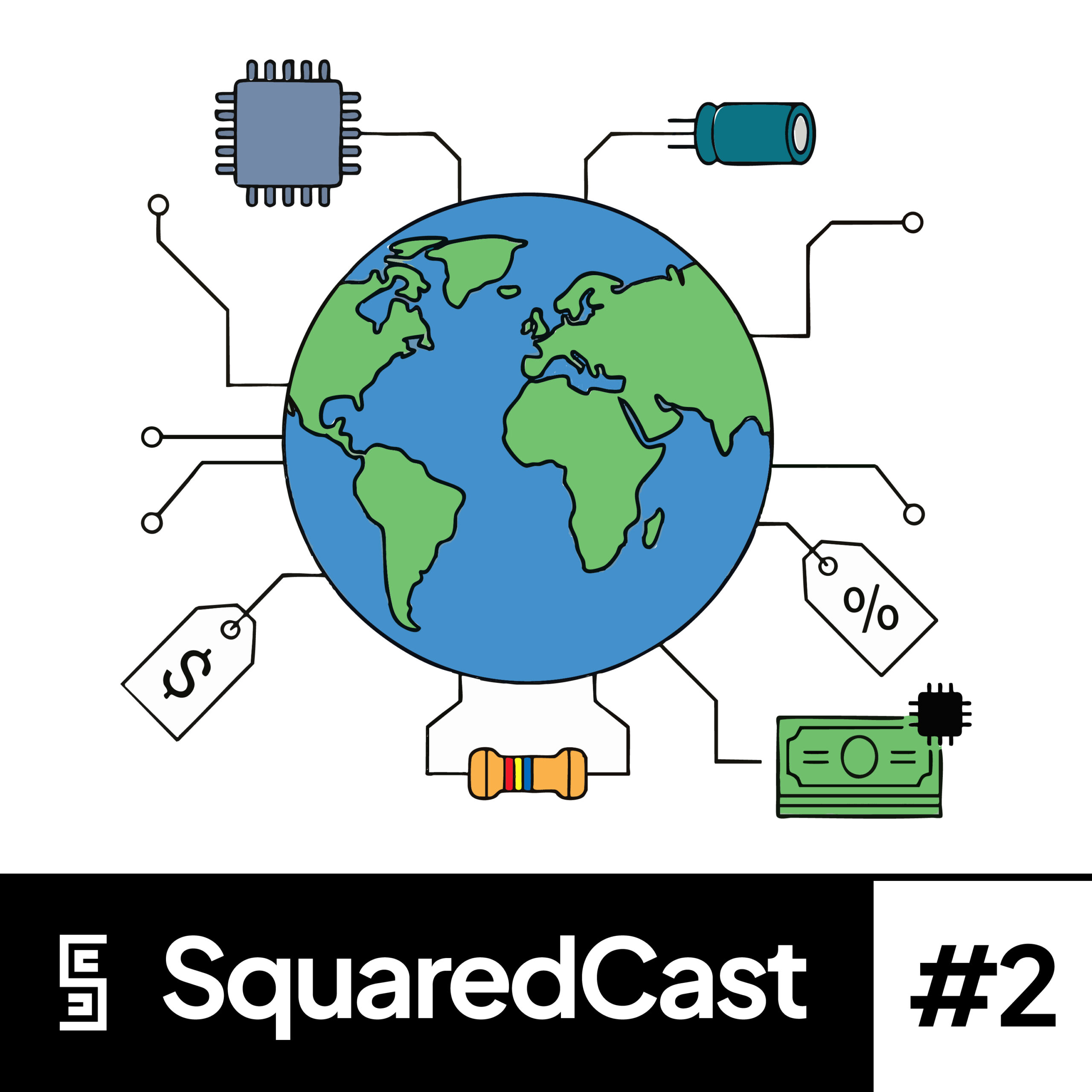
Last week, the lines between AI companies and the U.S. government got a lot harder to ignore. Anthropic refused to strip weapons and surveillance safeguards from its Pentagon contract. The government blacklisted them, then kept using their AI in a live military operation anyway. OpenAI signed the deal Anthropic wouldn’t, and the money trail tells its own story. Meanwhile, a Helldivers 2 fan tried to raise a thousand dollars for charity and lost his job, his volunteer work, and his safety. Nintendo sued the federal government to get its tariff money back. Researchers proved that AI can unmask your anonymous internet accounts for about four bucks. Apple launched its cheapest laptop ever the same week Samsung raised prices. And the global memory shortage got its own segment, because AI infrastructure is eating the world’s RAM supply, jacking up your electric bill, and pricing regular people out of the hardware market, all while the economic returns remain, in Goldman Sachs’ words, “basically zero.”
Topics Covered
- Anthropic’s refusal to remove weapons and surveillance safeguards from its Pentagon contract, and the unprecedented national security designation that followed
- OpenAI signing the deal Anthropic wouldn’t, and the political donation trail behind the timing
- Claude being used during Operation Epic Fury despite the government’s own ban
- A Helldivers 2 charity challenge that ended in death threats, doxxing, job loss, and a community meltdown
- Nintendo of America suing the U.S. government for tariff refunds after the Supreme Court struck down IEEPA-based tariffs
- ETH Zurich and Anthropic’s deanonymization research: matching anonymous accounts to real identities at scale for one to four dollars per person
- Apple’s $599 MacBook Neo launch and what it signals about the PC market
- RAMmageddon (Deep Dive)
- The 2024–2026 global memory shortage and AI’s role in causing it
- The DRAM price-fixing history
- Cascading effects on SSDs, GPUs, cars, and electricity
- Micron killing the Crucial brand
- China’s play for market share
- Whether the AI spending boom is a bubble
Plugs
- Chris N:
- Two “Alive with Steve Burns” podcast episodes
- Critical Thinking with Bill Nye: https://www.youtube.com/watch?v=oRHp2TL1KWk
- Adam Savage on Critical Thinking and Truth in a Post-Truth World: https://www.youtube.com/watch?v=a1c8zQDQc64
- My post: The Neuron Problem: Why AI’s Trillion-Dollar Bet Is Built on Bad Biology
- Two “Alive with Steve Burns” podcast episodes
- Chris V: The Boondock Saints (1999) – Wikipedia, IMDb
Other Links
- Patreon: https://www.patreon.com/c/SquaredCast
- Website: https://squaredcast.com
- Music – Project CSquared: https://soundcloud.com/project-csquared
Transcript
Toggle Transcript Visibility
IMPORTANT DISCLAIMER: Transcripts are auto-generated and may contain inaccuracies or differ from the spoken content.
Welcome back to Squaredcast, everyone. This is episode two, recorded on March 7th, 2026. The Pentagon blacklisted an American AI company for refusing to drop its safety guardrails. A Helldivers 2 fan tried to raise money for charity, and the internet destroyed his life. And Nintendo is suing the U.S. government, among other things. In the deep dive, we’re going long on “RAMmageddon.” AI is eating the world’s memory supply, and you’re the one paying for it. Plus, we’ve got a few bits to talk about in the build log as well. And as always, show notes and sources are on our website, squaredcast.com, if you want to support us and get bonus content. Our Patreon starts at two bucks a month. The link is in the show notes. Let’s get into it. All right. Nice.
The Rundown (News)
1. Anthropic, OpenAI, and the Pentagon
So, I’ve received many questions about this first story here. Anthropic had been providing its Claude AI to the U.S. military through classified networks run by Amazon Web Services and Palantir. Claude was the first frontier AI model deployed in the Pentagon’s classified environment under a roughly 200 million contract signed in July 2025. In January, Defense Secretary Pete Hegseth issued a memo directing all Pentagon AI contracts to adopt standard “any lawful use” language. Anthropic refused. They wanted two things left alone in their contract: one, a ban on fully autonomous weapons, and two, a ban on mass domestic surveillance of Americans. Hegseth wasn’t having it. In fact, he’s pretty angry about that, and you could see that on X. On February 27th, he designated Anthropic a “supply chain risk to national security.” The only publicly known prior use of a “supply chain risk” designation was an order issued in September 2025 by the Office of the Director of National Intelligence against Acronis AG, which is a Swiss cybersecurity firm with reported Russian ties. And that order was limited to intelligence community contracts. No American company has ever been on the receiving end of either designation framework. Trump piled on from Truth Social, calling Anthropic in all caps a “RADICAL LEFT WOKE COMPANY” and “LEFT-WING NUT JOBS,” and ordering every federal agency to immediately cease using its technology with six months to phase it out. Hours later, OpenAI announced it had signed the exact deal that Anthropic wouldn’t. Sam Altman later admitted the timing looked opportunistic and sloppy, but OpenAI then published a statement claiming its agreement “has more guardrails than any previous agreements for AI deployments, including Anthropic’s,” with explicit red lines against autonomous weapons, mass domestic surveillance, and NSA use. Anthropic CEO Dario Amodei pushed back hard, calling OpenAI’s safeguards “mostly safety theater that mostly do not work.” In an internal memo reported by Axios, Amodei wrote that Anthropic has not given “dictator-style praise” to Trump, while Altman has.
So if OpenAI’s deal includes the same restrictions that Anthropic was fighting for, what was the standoff actually about? CBS News confirmed the U.S. military used Claude over the weekend during Operation Epic Fury for intelligence assessments, target identification, and simulating battle scenarios in Iran despite the ban. The Wall Street Journal first reported the use. CBS independently confirmed it with two sources. Defense One reported it could take three months or longer for the Pentagon to replace Claude’s capabilities, with some sources estimating up to 12 months. The government blacklisted the tool it was actively relying on in a live conflict. Anthropic is now suing. Dario stated, “We do not believe this action is legally sound, and we see no choice but to challenge it in court.” Legal scholars at Lawfare published an extensive analysis arguing Hegseth used the wrong legal mechanism, one that provides no due process and no opportunity for Anthropic to respond. Lawfare called the designation “political theater,” a show of force that will not stick. The designation also says any contractor that does business with the Pentagon may not conduct commercial activity with Anthropic. If enforced broadly, that cuts Anthropic off from a significant portion of the Fortune 500. The company says eight of the ten biggest U.S. companies use Claude. However, Anthropic, Microsoft, Google, and Amazon have all argued the designation only restricts Claude’s use in direct Pentagon contract work, not commercial relationships at large. A bipartisan group of senators has publicly pushed back on the designation. Senator Kirsten Gillibrand called it “reckless and self-destructive,” adding, “The government openly attacking an American company for refusing to compromise its own safety measures is something we expect from China, not the United States.”
One angle that’s been getting traction online: a Redditor compiled FEC filings and OpenSecrets lobbying disclosures showing that OpenAI’s top two executives donated over 26 million to Trump-aligned political vehicles. Sam Altman gave 1 million to the Trump Inaugural Fund, confirmed by the Brennan Center for Justice. Greg Brockman and his wife gave 25 million to the MAGA Inc. Super PAC, making them the largest donors in that six-month fundraising cycle. According to the Brennan Center and Yahoo Finance/Bloomberg reporting, Anthropic’s donations to Trump-aligned vehicles: zero. On lobbying, OpenAI’s spend jumped from 260,000 in 2023 to 1.76 million in 2024, per MIT Technology Review and TechCrunch, with a Reddit-sourced estimate of roughly $3 million in 2025. Note that the official 2025 filing has not been confirmed as of recording. The Reddit post is careful to note that no document directly proves OpenAI lobbied to blacklist Anthropic. But as the author of the post put it, the stated policy dispute was a pretext. OpenAI got the same contractual safeguards. The real question is about political loyalty and who knows how to play the Washington access game. And we’re going to link that Reddit thread because it so perfectly lays out the financial trail linking OpenAI to the current administration. Of course, it would be the case.
When would it not?
I guess these days it’s kind of par for the course. At this point, it’s not surprising, which is sad in and of itself. Wow. Good stuff. That’s a pretty self-contained little story wrapped up in a bow there. Nice. I got a lot of questions about that. Felt like we needed to cover that. What’s next?
2. A Helldivers 2 Fan Raised Money for Charity. The Community Destroyed His Life.
Next up, we have a little bit of drama from a game we actually play called Helldivers 2. Oh, yeah.
Yeah, it is fun. There’s been a lot of situations where there’s been drama around the dev team. It’s happened quite a few times, but something of course came up that has once again stirred up the drama pot. On February 28th, a Helldivers 2 player posted a challenge on Reddit, and he did that on r/helldivers_unfiltered.
Okay.
He posted a challenge on that subreddit, and the pitch was simple: if four Arrowhead developers could complete an operation on the planet Oshane at difficulty 10—10 being the hardest, and Oshane is a very difficult planet—if four developers complete an operation on that planet at difficulty 10 and upload the video, and if they did actually successfully do it, he’d donate $1,000 to a charity of their choice. He was going to donate to charity anyway; he was just giving them the option to choose a specific charity. So even if they weren’t able to complete it, it was still going to happen anyway.
Gotcha.
The challenge was meant to highlight a community complaint about balance around difficulty 10 and Oshane specifically. There’s a lot of back and forth on that. The devs like to say that everything’s balanced, but the community has their own side to that, obviously. So, this challenge was curated to be like, “Okay, show us that it’s balanced by doing this.” I know that having played it since pretty much launch, they’ve had some balancing issues over time. When you’re balancing a live service game that’s online, that job’s never done. You’re always going to be doing balancing patches; it’s never going to stop. It’s always going to be a back and forth, especially with the community. Any change you do—if it’s a nerf, especially—it’s going to be met with negative feedback every time.
That was the challenge that started gaining traction. Other players and content creators started adding their own pledges to this challenge. Arrowhead CEO Shams Jorjani posted screenshots of himself and other devs giving it a try in the Helldivers Discord. The whole thing was shaping up to be great. I mean, people were getting involved. There was actually a lot of communication with the devs and the people that posted the challenge. It looked like things were going well, and then it all just came crashing down. The whole thing blew apart. What?
The person that started this challenge was receiving death threats. His wife was targeted. Jeez. Trolls tracked down the horse sanctuary where he had volunteered since 2011. Started sending messages there, too. He ended up deleting his Reddit account and posted a withdrawal: “I’ve received dozens upon dozens of messages like this. I first issued the challenge. I will be stepping off Reddit and the community as a whole. Stop trying to contact me. The challenge is officially over on my part.”
Oh, man.
And then on March 6th, he resurfaced with an update. According to the messages circulating across multiple Helldiver subreddits—which no outlet has been able to independently verify with the employer or sanctuary, right—the doxing cost him his job of 7 years and got him removed from the sanctuary he had been volunteering at for roughly 15 years. 15 years.
Yeah. So, he’s lost his job. He’s no longer welcomed at the sanctuary he volunteered at.
What about my animals? What are they going to do?
Reported a message stating, “I’ve been banned from the horse sanctuary I’ve been volunteering at since 2011 for security reasons.” If the account is accurate, a $1,000 charity pledge about a video game destroyed someone’s livelihood.
Come on.
It was meant to be a fun thing that ended up being quite tragic for one person. Come on. Arrowhead and Sony posted statements about this. This was actually posted in the Helldivers official Discord, and that says, “We do not tolerate threats of violence, harassment, or doxing towards anyone—players, creators, developers, moderators, or our teams in any community spaces. Humans are not the enemy. Helldivers, your fight is elsewhere.” That is the closing statement. It’s not the full statement. We have a screenshot of this that will be in the show notes. The gist is they’re trying to sweep it under the rug like, “Oh yeah, this is bad. You shouldn’t be doing this. Let’s move on.” No, guys. Yeah.
And ruin someone’s life and livelihood here.
Yeah. Maybe we don’t do that yet.
It’s not good. And then we had a little drama on the Helldivers subreddit, especially with the moderation team. That original person that posted the challenge got banned from that subreddit as well. Yeah.
Why? What did they do?
It… the whole thing is just out of control. What the r/helldivers moderation team confirmed is this situation is not the fault of the original user and initially banned all future challenges directed at individuals or the studio. They later walked that back after more backlash, replacing the blanket ban with a rule requiring mod approval for challenge posts.
Wow.
The main subreddit’s handling of the situation became its own controversy. Mods locked and deleted posts discussing the doxing, banned users for what many felt were thin reasons, and the community response was a textbook Streisand Effect. There’s many other Helldiver-related subreddits. Several of those smaller subreddits became hubs for discussing this and people talking about it so they wouldn’t get banned. Content creators started jumping in with their own coverage. A community-compiled timeline is actually on a subreddit called r/helldivers_unfiltered which has a nice little breakdown of the events from start to finish. You can visit that if you’re curious about everything that has transpired in this little squabble going on. But yeah, what started out as a fun little thing just ended up ruining someone’s life instead.
I just love when that happens. The internet can be such a fickle place. Do we know anything about the people who antagonized and got him fired?
There’s some stuff around… some talk about that being the moderation team of r/helldivers.
Really?
A lot of people on the other subreddits—unfiltered, etc.—have been talking about how toxic that moderation team actually is. And there are people that think that at least some of those people might have been involved. Some of the moderators from that official subreddit.
I don’t spend enough time in the Helldiver subreddit to really speak to that myself, but just Reddit in general… sometimes moderators, man, they can get out of control.
You get this power dynamic and you feel like you can because you do—you have that power to ban people, delete messages, posts, etc., censor things. And yeah, some of these people… it goes to their head completely. It’s like, “Oh, I don’t like what you’re saying. I don’t like that you’re arguing with me. I’m going to do this.” That person’s not even breaking the rules.
Saying something they don’t like. I mean, what good is that? That’s not moderation. That’s censorship.
Moderation is supposed to uphold the rules that they lay out for the subreddit. I mean, really, that is it. Like, you’re not supposed to overstep that and take it personally and do things just because you’re mad at someone or you disagree with them or whatever the case might be. Wow. There might be more information that comes out about who or some of the people that are behind this, but there are some people talking about it. They wouldn’t be surprised if it had something to do with the moderation team of r/helldivers. It’s really sad that this is happening with Helldivers 2 of all games because I’ve always felt kind of maybe a sense of camaraderie with the other players. I mean, there’s no PvP stuff going on. It’s all just everyone’s playing together as a team. There’s no “versus,” right?
I like that. I always appreciated that about Helldivers 2. And then to have this happen is so disappointing.
It is not the first controversy for this game. And this is maybe like the fourth one.
Really? Oh, what did I miss? Where have I been?
There’s been a lot of nonsense. I mean, most of it gets swept under the rug because they release some kind of blanket corporate statement and then everyone just moves on. But a lot of people are really upset about this because this is someone that was dedicated to the game, wanted to do something fun, and it was a charity event.
I mean, they put up a grand for this. That’s serious cash.
It’s a charity event on top of all of this, and now it’s being treated like it’s this heinous crime. And that person that started this challenge… they’ve lost so much. This person does what very few people even do in the first place: volunteer. They lost that, lost his electrical job.
Special place in hell for whoever is responsible for all that.
That’s what happens when people figure out where you live, where you work, people you talk to, friends, family. They just start harassing the hell out of those people and then eventually that gets to a breaking point and, yeah, you could lose your job, you could lose friends. I mean, it’s insane. It literally ruins someone’s life.
Brutal. And that’s exactly what happened with this.
3. Nintendo Sues the U.S. Government Over Tariffs
Anyways, you added another link, another story that I don’t really know a whole lot about here, but it was a good addition and very timely. Yeah, obviously everyone knows the name Nintendo. I mean, who wouldn’t know Nintendo? They’ve been around and they do a lot of lawsuits. They do law suing. That is something they’re also very big on.
I feel like most people know that, but just in case, Nintendo is very litigious.
Very sue-happy. So now their latest lawsuit is against the U.S. government over tariffs. Since February 2025, the Trump administration imposed escalating tariffs on imports under the International Emergency Economic Powers Act. Japan was hit with a 24% “reciprocal tariff,” Vietnam with 46%, and tariffs on Chinese goods climbed significantly higher through a series of executive orders. Nintendo manufactures its consoles and accessories overseas, mostly in Vietnam and China. So, this hit them directly. The company had to delay U.S. pre-orders for the Switch 2 and raise prices on accessories.
Let’s be honest, who’s going to buy this?
Last I saw, it was pretty high selling, actually.
Really? Wow. Okay. All right. Doing pretty well despite the problems. Then on February 20th, the Supreme Court struck down the IEEPA-based tariffs, ruling that the president exceeded his authority under the law, which then prompts Nintendo to launch this lawsuit. On March 6th, actually—so literally yesterday—Nintendo of America filed suit in the U.S. Court of International Trade.
The defendants list reads like a government directory: Treasury Department, Department of Homeland Security, Department of Commerce, Customs and Border Protection, and the Office of the U.S. Trade Representative. Plus Treasury Secretary Scott Bessent, former Homeland Security Secretary Kristi Noem, and others. So, everyone. Everyone’s going to see.
Coming for the whole crew. Oh, man. Everyone’s going down. Everyone’s getting hit.
It’s a really, really huge lawsuit. Nintendo’s lawyers argue that since the tariffs were ruled unconstitutional, every dollar collected under them needs to come back. Their complaint states the tariffs, quote, “have to date resulted in the collection of more than $200 billion in tariffs on imports from nearly all countries.” They didn’t disclose a specific dollar amount for Nintendo, but the filing demands a refund, quote, “with interest.”
Of course, they would ask for interest. They saw the opportunity once it was deemed that the tariffs were unconstitutional. Of course, they would seize that opportunity, but okay, we get our money back.
So, Nintendo is one of more than a thousand companies that have now filed similar suits. So, Nintendo is not the only one suing, but we have FedEx and Costco are also jumping on this. A judge ruled on March 5th the companies are entitled to refunds, but Customs and Border Protection told the court it can’t process them right now. In a court filing obtained by W-News, CBP estimated it had collected roughly $166 billion under the now-invalid tariffs and said it was facing an “unprecedented volume of refunds.”
No, you don’t say.
With “existing administrative procedures and technology,” they are “not well-suited to the task of this scale.” CBP said a new process for refunds could be ready in 45 days. It’s so absurd. Is the fact that this is even a story here… Nintendo’s got a big lawsuit here.
Trump, for his part, responded to the Supreme Court loss by imposing new tariffs under Section 122 of the Trade Act of 1974. That statute has never been invoked before, actually. It allows the president to impose tariffs up to 15% and limited to five months unless extended by Congress. Two dozen state attorneys general filed a separate suit to block the new tariffs. Nintendo’s official comment was peak Nintendo: “We can confirm that we have filed a request. We have nothing else to share on this topic.” And all they’re saying is like, “Yeah, we filed it. That’s it.”
Yeah, we filed it. Nintendo has a long, long history of lawsuits, but this, I think, undoubtedly is the biggest one I think they’ve ever filed, right? They didn’t specify a dollar amount, but potentially quite a big chunk. I’m sure we’re going to know more as time goes on with how this goes.
Keep your receipts.
Look at that list there. I mean, who was that? Treasury Department, Department of Homeland Security, Department of Commerce, Customs and Border Protection… this could be a years-long pending lawsuit that may never get resolved. I mean, who knows? Nintendo, all they said is that they filed it and that’s it.
Okay, thanks for the transparency, guys.
And that is it.
4. AI Can Unmask Your Anonymous Internet Accounts for About Four Dollars
AI can unmask your anonymous internet accounts for about 4. 4. Inflation hit that, too.
Exactly. Here’s the story. All right. In late February last month, researchers from ETH Zurich, which is a public university in Switzerland, and Anthropic published a paper called “Large-scale Online De-anonymization with LLMs.” They built a four-stage pipeline that uses large language models to match anonymous online accounts to real identities. And they tested it against Hacker News profiles, Reddit users, and anonymized interview transcripts.
The system correctly matched 67% of anonymous Hacker News users to their real LinkedIn profiles from a pool of 89,000 candidates at 90% precision. Total cost for the experiment: under 2,000. And that works out roughly to a cost per person of anywhere between 1 and $4. The idea that your scattered anonymous posts are safe because linking them together takes too much effort? Well, researchers are calling that “practical obscurity” and it’s done. It’s done. It’s not happening anymore. Lead researcher Daniel Pekka told CyberScoop, “If your operational security requires that no one ever spend hours or days investigating who you are, this security model is now broken.” He also said that he was “very worried” and described the capability as a “large-scale invasion of privacy.” Jacob Hoffman-Andrews added that “posting even a small amount of identifying information in contexts where you might not imagine anyone is trying to unmask you might result in somebody linking that identity.” It’s also worth noting here the timeline. Anthropic co-authored this paper and this is the same week that they went to war with the Pentagon over mass surveillance concerns. So that’s a little scary. I think it makes perfect sense, though—you do that and then you combine it with something like browser fingerprinting, which I wrote a blog post about, and holy man. I mean, nobody is anonymous anymore. You can use the most secure browser on the most secure network possible. They’ll find you. They’ll get you. No, we don’t like that you’re hiding behind your username. We want to know where you are, who you are, who you’re associated with, who you work for, whatever.
Pollute your data. That’s a possible countermeasure to something like this. Make it look like you’re more than one person or your interests line up with something else. Scatter your data.
Make that data useless if you can. Just pollute it, right? Like our environment.
No, it’s already bad enough.
Yeah, we don’t need more of that, actually. No, maybe that’s… maybe don’t do that.
Unfortunately, that’s the only real advice that’s actionable that I could give to something like that—just post some nonsense. Whether it’s on your account or an alt or whatever the hell. We need to introduce more uncertainty into the system that would make it potentially harder for those people to track down. The problem is you don’t want to be too uncertain because then that uncertainty in and of itself becomes a data point that they could identify you as. So, there’s like a real fine line you have to walk to get away with something like that. But, anyway…
5. Apple’s $599 MacBook Neo
Apple’s 599 MacBook Neo. On March 4th—so three days ago—Apple announced the MacBook Neo. It is the cheapest laptop Apple has ever sold. Funny enough, it runs on the A18 Pro chip, which is the same processor inside the iPhone 16 Pro. Apple has never put a mobile chip in a Mac before. The Neo has a… this feels… it feels like I’m selling this thing now. The Neo has a 13-inch Liquid Retina display, up to 16 hours of battery life, and comes in four colors. The timing of all this is, I would say, calculated. IDC, one of the major tech market research firms, expects the PC market to shrink about 11.3% in 2026. Gartner expects PC prices to also jump 17% this year because of the ongoing memory shortage, which again we’re going to talk about in a little bit here. Apple is doing the opposite, launching a cheaper product while everyone else’s prices go up. I mean, honestly, at those specs, it’s more like a 299 laptop. It really is, though. Yeah, but now it’s going to be $600 plus tax, so that should be fun.
Forgot the tax. Ah, jeez.
The Deep Dive (“RAMmageddon”)
The price shock
Well, it’s all thanks to the “RAMmageddon.” Just to set the stage, TrendForce—the go-to memory market research firm—revised its Q1 2026 DRAM forecast upward twice within five weeks. Its January projection: 55% to 60% quarter-over-quarter increase. The February revision: 90% to 95% increase quarter-over-quarter. PC RAM specifically: DRAM over 100% in a single quarter. Samsung reportedly doubled its prices by the time contracts were finalized in March. According to DigiTimes reporting, year-over-year, DRAM contract prices were already up 171.8% by Q3 of last year. DDR5 spot prices have quadrupled since September, six months ago. A 32GB kit of DDR5 Corsair-branded RAM that sold for about 90 in November 2024 is now peaking at 427. What the? That’s insane.
XDA Developers tracked 32GB DDR5 kits going from 95 back in July of last year to anywhere between 350 to 600 by just January of the beginning of this year. Individual 16GB DDR5 chips went from 6.84 to $27 in three months—a 298% increase roughly. Winbond’s president said memory prices would hit nearly 4x by June 2026, with the DDR4 supply gap “so large that it’s hard to see how it can be filled,” which I would agree with. That is insane. We’re talking quadrupled now. Already last year was not going super well, but now it’s really… it’s really bad now. So, okay, we’ve got all these prices going up. Why is the main thing? Why, why, why?
AI ate the world’s memory supply
Well, three companies make up 95% of the world’s DRAM: Samsung, SK Hynix, and Micron. And all three are pivoting hard toward a type of memory called HBM, which is High Bandwidth Memory. That is the type of memory that goes into AI GPUs like Nvidia’s Blackwell. The margins on HBM are way higher than consumer RAM. So, the business decision is obvious. The problem? Each gigabyte of HBM eats roughly three times the wafer capacity of a gigabyte of DDR5 RAM. Francisco Geronimo—what a great name—put it simply: every wafer allocated to HBM is “a wafer denied to the LPDDR5X module of a mid-range smartphone or the SSD of a consumer laptop.” There you go. I mean, that’s basically it. Manufacturers are choosing AI instead of consumers because AI is where the money’s at. That’s where the money is. The other thing is the IDC is not calling this cyclical. They’re not saying that this price increase is simply a mismatch in supply and demand, but rather a permanent, possibly strategic reallocation of the world’s silicon wafer capacity. This is not like what we saw in the middle of the pandemic when everybody had to buy devices because everyone had to stay at home and use the internet to do stuff. This is potentially a situation where this won’t resolve. Like, logistics aren’t just going to catch up. Supply and demand isn’t going to fix itself in the long run here. This might actually be permanent because of how much money there is to be made selling memory for AI companies.
Everyone’s paying for it, and the specs are getting worse
I think it’s also worth mentioning here the same companies that I just mentioned: they have a history of price fixing memory. It’s not great, so it doesn’t surprise me. They’re the big three and they run the show. Between 1998 and 2002, Samsung, Hynix, Micron, Infineon, and Elpida ran a price-fixing cartel, coordinating prices on DRAM sold to PC makers like Dell and Gateway. The Department of Justice busted it in 2002 after Micron flipped and blew the whistle. Samsung pleaded guilty and paid a 300 million criminal fine. Hynix paid 185 million. Infineon paid 160 million. 18 people were charged and 15 were convicted. Even some Samsung executives went to prison. So again, that was back in ’98 between ’98 and 2002. Then in 2010, the European Commission hit nine memory companies again for the same scheme, fining them a collective 331 million. SK Hynix has already pre-sold its entire 2026 output. Micron’s 2026 HBM supply is fully booked. Cloud providers left global memory capacity for 2026 nearly sold out, and they’re already locking in 2027 contracts. One of the biggest buyers here, OpenAI’s Stargate project, may consume around 40% of total global DRAM output. And that’s just one project. That’s only OpenAI’s Stargate project. The big five hyperscalers collectively plan to spend anywhere between 650 and 690 billion on capital expenditures in 2026. And 75% of that, or about $450 billion, is solely for AI infrastructure. It gobbled it up. It’s eating everything, dude. Everyone’s paying for it, right? Specs for consumer stuff are getting worse. Everyone’s getting the shorter end of the stick.
Well, that leads into this next bit here. HP’s Chief Financial Officer confirmed during Q1 2026 earnings that RAM costs had doubled in a single quarter and now make up 35% of PC component costs, up from 15% to 18% the quarter before. Dell’s COO said he’d “never seen memory chip costs rise this fast.” Lenovo told partners to place orders by February 28th or face “March repricing,” whatever that means.
Five major OEMs, including Lenovo, Dell, HP, Acer, and Asus, announced 15% to 20% hikes. Gartner’s Ranjit Atwal delivered the punchline on February 26th: “This is the steepest contraction in device shipments witnessed in over a decade.” PC shipments are projected to drop 10.4%. Smartphones dropping by 8.4%. Gartner projects the sub-500 entry-level PC segment will disappear entirely by 2028 as memory costs make low-margin hardware unviable. That sucks because I like Raspberry Pis and that’s all low-memory stuff. That’s all sub-500 stuff. It makes me wonder how those components are going to be affected. Then there’s the shrinkflation angle, which might be worse than outright price hikes because most people won’t notice, right? Consumer Reports warned, quote, “That $600 laptop you buy in 2026—Apple Neo, shut up—might look identical to the 2025 model, but under the hood, it may have a dimmer screen and 8GB of RAM instead of 16.” Pretty much word-for-word what we’re seeing with the new Neo. TrendForce projected budget smartphones will drop back to 4GB of RAM in 2026. HP explicitly said it would “introduce low-memory configurations as part of a demand-supply equation matching.” Same price, worse product—tech shrinkflation at scale there. CEO Carl Pei called it in a January blog post: “For 15 years, the smartphone industry relied on a single reliable assumption: components would inevitably get cheaper. In 2026, that model has finally broken.” And Samsung’s president acknowledged at CES 2026 that “there’s going to be issues around semiconductor supplies, and it’s going to affect everyone.”
The cascade (SSDs, GPUs, cars, your electric bill)
For PC builders, it’s even uglier. Jeff Geerling, who has an awesome YouTube channel, by the way—does pretty incredible things with Raspberry Pis, I think that’s his most well-known content—anyway, he wrote, “We might be hitting a weird era where the PC building hobby is gutted, single-board computers get prohibitively expensive, and anyone who didn’t stockpile parts earlier this year is pretty much in a lurch.” Power PC reportedly said RAM costs had ballooned by 500%. Motherboard sales have reportedly dropped 40% to 50% year-over-year. There are supposedly reports of Micro Center removing price tags from memory kits in some locations and moving to “spot pricing” at a retail store for RAM of all things. Just in case anybody doesn’t know what spot pricing is: spot pricing means the price is whatever the market says it is right in that moment of the transaction. There’s no fixed sticker price or catalog price. There’s no label that says this kit is $149 until we update the shelf tags next month. None of that. The price floats based on current supply and demand. It can change daily or even within the same day. I should also note that the spot pricing claims for Micro Center—I can’t reliably confirm those, but supposedly it’s happening. So, all this pricing sucks, but the cost goes beyond RAM sticks. Like the shortage is rippling through every part of the electronics supply chain. SSDs, GPUs, cars, even your electric bill is going to be up by the end of this thing. No.
Kingston confirmed a 246% increase in NAND pricing versus Q1 of 2025 with 70% of that jump happening in just 60 days. Phison’s CEO said every NAND manufacturer told him 2026 production was sold out—all of it—and that a 1TB TLC chip went from 4.80 to 10.70. QLC NAND is backordered by two years. Nvidia plans to slash RTX 50-series production by 30% to 40% due to GDDR7 shortages because they’re prioritizing AI. Memory now makes up nearly 80% of a consumer GPU’s manufacturing cost. That’s crazy to think about. It’s not even the chip that’s the expensive part. It’s the memory. 80% of that cost.
You’re paying for the memory in the car. The auto industry is panicking, too. A Counterpoint Research analyst told Bloomberg, “We are already seeing signs of panic buying within the auto sector.” That’s crazy to think about. So, obviously, we’ve got the SSDs, GPUs, cars… all of that is rising in cost because of the knock-on effects of RAM pricing. But what’s also going to increase is your electric bill. Bloomberg found wholesale electricity costs up as much as 267% in areas near data centers. The PJM grid serving 67 million people across 13 states saw capacity auction prices jump up 833%. Virginia, where data centers consumed 26% of the state’s electricity in 2023… that’s crazy. A whole quarter of the state’s electricity went to data centers. Residential bills are projected to nearly double by 2035. Carnegie Mellon’s study found data center growth could increase average U.S. electricity costs 8% nationally and over 25% in Northern Virginia by 2030. NPR’s Kathy Kunkel said, “I think it’s almost inevitable that ordinary people are going to end up subsidizing the wealthiest industry in the world.” And I think she’s absolutely right.
The supply chain is broken, Micron killed Crucial, and relief is years away
You brought this up earlier. Actually, this is the next self-contained part of the story here, which is about Micron and Crucial. You want to give us a lowdown there? Give you the DL. I’ll give you the scoop, the word on the street. So, the supply chain, as we’ve already talked about, is very broken. And one of those manufacturers is Micron. They also had a consumer-focused brand called Crucial, which they have recently completely dismantled. On December 3rd, 2025, Micron killed its Crucial consumer brand that has been operating for 29 years. Come on.
Their executive VP said, “Micron has made the difficult decision to exit the Crucial consumer business in order to improve supply and support for our larger strategic customers in faster-growing segments.” And basically what he’s talking about: they’re going to start supplying AI companies instead. Yeah, screw the consumer market. We’re not making enough money there. Let’s go all into AI, full send. Right.
That is what is currently happening. We’re seeing that in real time. So the consumer shipments stopped by the end of February 2026. CRN, an IT industry trade publication, called it what it is: this “eliminates one of the three major DRAM manufacturers from the consumer markets.” When backlash hit, Micron said, “We are trying to help consumers around the world.” You know who is the consumer around the world you’re trying to help? Not the consumer. You can’t help the consumer if you’ve completely taken away the consumer-focused brand you had.
Yeah, that is their quote after they started getting some backlash. In the same breath, warning the DRAM drought could last until at least 2028, possibly longer. We won’t know till we get there, man. CEO Wallace Kou of Silicon Motion—one of the biggest SSD controller makers in the world—gave the quote of the whole crisis in an earnings call: “We’re facing what has never happened before. The HDD, DRAM, HBM, NAND, all in severe shortage in 2026. Most of our capacity is sold out.” Asked about the allocation, he said, “Of course, the majority will go to AI and AI servers.”
So, there you go. I know that there are some new fabs under construction, but the thing is the timelines are brutal. Micron’s Idaho facility targets first wafer output in mid-2027. A second Idaho Fab is also in the works, but it won’t arrive until the end of 2028. Their New York Mega Fab: not until 2030. Samsung’s Texas fab also slipped to early 2027. SK Hynix’s Indiana facility focused on HBM packaging—which again is not consumer DRAM—is targeting the second half of 2028. Every single one of these fabs is being built to serve AI demand, not consumers. TrendForce Senior VP Averil Woo said, “The newfound production won’t make a noticeable difference in global supply until 2028.” But Intel’s CEO was even more blunt: “There’s no relief until 2028.” I could see that. I think that is the best case: 2028. But we have a new player in the DRAM space. Now, China is now involved with manufacturing RAM on the consumer market. China has two large memory companies. One is called CXMT. It is now the world’s fourth-largest DRAM maker—about 11% of global capacity according to Yole Group, with plans to reach nearly 14% by 2027. They’re building a Shanghai fab two to three times the size of their existing Hefei headquarters, targeting production in 2027 and filing for a $4.22 billion IPO to fund the build-out. TechInsights assessed that CXMT “still trails the three largest DRAM players by about three years.” While South Korean experts put the gap at two to three years, down from a decade ago, which is pretty good actually. They’re not that far behind. They’ve already demonstrated DDR5 at 8,000 megahertz and LPDDR5X chips. Despite U.S. export restrictions, they have reportedly delivered HBM3 samples to… also I think meanwhile you have another Chinese company called YMTC. Traditionally they are the primary manufacturer of NAND flash. They are building another fab, this third one, in Wuhan. About half the planned capacity will be dedicated to DRAM instead of NAND. So they are shifting a little bit towards DRAM obviously since there’s a sort of worldwide crisis for that at the moment. Just a little. Yeah, they are targeting a 2027 production. A YMTC supplier told Nikkei Asia they started to develop their own DRAM more than two years ago. Now it is only a matter of time for them to produce quality DRAM and HBM going forward. Big fans, let’s go. Let’s go China.
Both companies are on U.S. export restriction lists. Can’t buy cutting-edge tools from ASML or Applied Materials. So they’re building on older-gen equipment and racing to localize their supply chains. Whether they actually close the gap under those conditions is an open question. But if they get meaningful volume online by 2027, even at older process nodes, every chip China makes domestically is one less chip competing for supply from the big three.
Yeah, we got a competitor. Now you guys shape up.
Best-case analyst estimate: about 60% probability of meaningful price decline starting quarter 3 of 2026 with normalization by quarter 1 to quarter 2 2027.
There’s no way.
Worst case, it’s late 2027 or early 2028. But the normalization means returning to pre-shortage pricing trends and not the bargain-bin prices of 2024. Those are non-existent. You will never see that again. I guarantee they’re just gone. Never going back.
Yeah.
Is this a bubble?
All of this spending begs a question that’s getting louder by the week: are we watching the foundation of the next major technology platform or the largest misallocation of capital since the dot-com era? One value we can look at here to actually help us decide… these are in isolation. It doesn’t necessarily mean anything, but it’s interesting: the Shiller PE ratio. This ratio measures how expensive the stock market is relative to what companies have actually earned over the past ten years adjusted for inflation. It’s basically a reality check on whether stock prices match what businesses are producing. So recently the Shiller PE ratio hit 40.58 in early January 2026. In 155 years of data, it’s only been sustained above 40 twice: now and the dot-com peak where it hit 44.19. The historical mean is 17.3. 1929 only hit about 32.5. The top ten S&P 500 stocks now make up about 40% of the index. RBC Wealth Management warned this “effectively turns the index into a directional bet on AI adoption and monetization.” Goldman Sachs’ chief economist said AI’s contribution to 2025 U.S. GDP was “basically zero.” Their head of equity research, Jim Covello, has been asking publicly, “What trillion-dollar problem will AI solve?” He warned, “Overbuilding things the world doesn’t have use for or is not ready for typically ends badly.” I think I would have to agree with him on that. A National Bureau of Economic Research paper surveying nearly 6,000 executives found over 80% of firms report no impact from AI on employment or productivity over the past three years. Sequoia Capital’s David Cahn called it “AI’s 600 billion question,” noting the gap between AI spending and AI revenue “has not closed, it has widened.” OpenAI—the company driving a huge chunk of this demand—generated roughly 13 billion in 2025 revenue. Projected losses for 2026: 14 billion. They’re seeking up to a hundred billion in additional funding to cover cumulative losses expected to reach 115 billion through 2029. Jamie Dimon at JP Morgan’s February investor day said, “Unfortunately, we did see this in ’05, ’06, ’07… almost the same thing. The rising tide lifting all boats, everyone was making a lot of money, people leveraging to the hilt.” And then actually very recently here, the February jobs report landed yesterday, which was March 6th. The economy lost 92,000 jobs when economists expected a gain of 50,000. The economy has averaged essentially zero net job creation over the past six months, according to Indeed’s Hiring Lab. So we’ve got the Shiller PE ratio at historic levels, AI contributing basically nothing to GDP, and the labor market is going sideways at best. That’s the backdrop. In the context of this AI memory pricing, the economy is really not doing that well, or at least as well as it seems like everyone is saying. Like, nobody can predict the future. I would love to be wrong. I really want to be wrong, but there’s a lot of really wealthy people acting like the music is not going to stop and that scares me a lot. It’s going to stop. Maybe look into diversifying or something. I just… I would consider it before it’s too late.
What you can actually do
You might be asking yourself, “Well, what can I do?” What can I do about all this? What can I do about the prices?
What can I do?
What can we do? What do we do, Randy? Well, the consensus is if you need the hardware, you better buy it ASAP. Everyone in the supply chain is essentially saying the same thing. Kingston’s Cameron Randall said, “My advice today would be to not hold off on that purchase because it will be more expensive 30 days from now and more likely it will be more expensive 30 days after that.” So the longer you wait—and the trajectory of this shortage would support this—the longer you wait, the worse it’s going to get. It’s just going to keep getting worse. So you’re going to be waiting for a while if there’s any relief to be had from this. If you absolutely have to buy what you need now, literally do it tomorrow. Don’t wait. Do what you can to try to get it as cheap as possible, but it’s going to be a real crapshoot, honestly.
God… for a long time.
You got to watch for shrinkflation. If you’re shopping for laptops or phones, you got to look at the specs. Compare it to last year’s model. See if you’re getting less. Getting less, paying more. Just kind of compare. See what you’re actually getting. For people that self-host: look at used enterprise RAM from decommissioned servers. DDR4 ECC DIMMs from decommissioned cloud hardware can still be found at reasonable prices if you know where to look. But let’s be honest, it’s going to be rough. There’s going to be few options. But there are some options.
I mean, it’s hard when there’s three companies that control 95% of a resource and all three chose to serve AI first and left the buyer—consumer, us—out of the picture. Thanks, guys.
Yeah, it’s really… it’s really difficult to combat. And that is completely it for the deep dive on the whole RAMmageddon crisis.
The Build Log
Chris N: Subtoken Auth & Database Evolution
Good. Oh, that was very thorough. We got all the news covered. So, next up here is the build log. We originally planned on having a normal episode structure in the first episode. That didn’t turn out because of how many times we were forced to re-record the same thing. So, we omitted that from the first episode, but we’re bringing back the structure for this one. So, I’ll start off here. What am I building? The project that I’ve been pouring most of my dev time, energy, and passion into is a project I’m calling Subtoken Auth. Quick version of the problem it solves: if you self-host services like Nextcloud for your files or Jellyfin for your media library, you’re probably already using something like Authelia or another authentication solution to handle logins. Single sign-on, two-factor authentication, the whole deal. That works great in a browser. Browser knows how to follow redirects, handle login pages, all of that. A lot of these services have mobile apps, and those apps… they don’t know how to follow a single sign-on redirect. They don’t support two-factor authentication. They just want a username and a password or a token, and that’s it. So, you’re stuck either poking holes in your firewall to let the necessary app services through and communicate or just not using the app at all. Either one of those sucks, especially the first one, because then you have to constantly keep tabs on what ports, paths, restrictions are in place and make sure that you’re not allowing more access than you need to. You just have to stay on top of it, and that’s a pain in the ass. Well, Subtoken Auth fills that gap. You generate tokens with specific permissions and restrictions baked in: what services they can access, what devices they’re allowed on, when they expire—and every single request gets validated against those rules. The project isn’t public yet, but I hit a fairly big milestone with it this week. So, I’m going to tell you about that. Actually, I thought this was a valuable learning experience, and I’m just going to try and do my best to save you from the same mistake I made.
JSON as a Database
JSON as a database. I’ll tell you all about that, which sounds insane when you say that, but there was a reason for it. All right. Subtoken Auth sits behind a reverse proxy. My reverse proxy of choice is one called Traefik. You can think of Traefik like a bouncer at a nightclub. Every person who walks up to the door, the bouncer turns to my application and asks, “Hey, should I let this person in, this device in?” My app checks their token and then says yes or no. Every single request that comes through hits a validation endpoint: every page load, every API call, everything. And for the longest time, I was storing all my token data—all the paths, the permissions—in a JSON file. And for anyone who isn’t a developer, JSON is basically a text file with structured data in it. If you’ve ever seen the page source on a web page, you’ll see those tags. It’s kind of similar to that. It’s structured. It’s great for passing information around, but it’s absolutely not a database. Imagine if you had like a filing cabinet, right? But instead of folders and tabs, you threw every piece of paper in that filing cabinet onto the floor loose. And then anytime you needed to find something, you dumped that whole cabinet on the floor and had to sift through it. That was my system. I was loading the entire file into memory, searching through it with handwritten logic, and then flushing it back to the disk whenever something had changed. And it worked for months. Worked fine, but I was writing hundreds of lines of extra code to do things that a real database just gives you for free. And those things include sorting, filtering, looking things up by multiple fields… all of it reimplemented badly on top of a text file. The main reason I chose JSON for that was because I’ve had multiple bad experiences with database corruption and I did not want to have to deal with that again. I was like, “Okay, something goes wrong, I can just open up this JSON file. I can edit it and everything’s gold and I can change whatever value I want, just restart the application and it’s there.” And that is the case. You can do that and it works for that. But the problem is you lose all those extra features that you would get with a proper database.
The Audit: Thousands of Lines That Didn’t Need to Exist
So ultimately, we were making great progress, and then I was like, “All right, let’s get an extra pair of eyes on this.” So ran it through an audit which found that there were thousands of lines that didn’t need to exist. So that audit report made it really clear that I probably don’t need to reinvent things and just use the tools that already exist. So the rewrite moved over to SQLite, which is a proper embedded database—the same one that runs on, weirdly, lots of devices, including your phone probably. And immediately, thousands of lines of custom code: just poof, gone. The database handles the querying, the indexing, the persistence. I write an SQL statement and I get my answer and I don’t have to worry about any of that other. The other thing I did very differently with this new rewrite is testing. Not just unit tests like the basic checks where you test a single function in isolation—like does 2 plus 2 equal 4? Well, yeah. I mean, those are very important, but they only catch certain kinds of bugs.
Running Everything on a Laptop
The thing I’m actually really proud of is the end-to-end testing setup in a production environment. There’s a whole chain, right, for this application to work. This is one part in that chain. Subtoken Auth exists to allow and deny the request. Traefik, which is the reverse proxy, acts as the bouncer. Authelia handles the security and login authentication stuff. So in many projects, you’d test your app by itself and then kind of hope everything works when you plug it into the real chain. That’s exactly where the sneakiest, most difficult to solve bugs live: in the gaps between those systems. So, as part of this rewrite, before I even started on UI or anything like that, I built a fully local replica of the entire production stack. So, when I run my test script, it spins up the whole chain of all those services right on my laptop. Same software, same configuration, same routing rules. Then an automated browser opens two separate sessions: one logged in as an admin user and one logged in as a regular user. It then walks through the actual application the way a real person would, all behind the scenes—clicking buttons, filling out forms, creating tokens, testing permissions—and the whole thing then tears itself down when it’s done. Overall, right now I have about 500 tests. They’re all triggered by one script, and they all run. I think my last benchmark here was 24 seconds. So when I ship that code, I don’t have to cross my fingers, right? Like, I’ve already run everything through the same gauntlet that it’s going to face in the real world.
The End Goal? Your Phone as the Control Panel
The end goal here is to have your phone basically as the control panel for Subtoken Auth. All this foundation work is building towards that specific experience. Subtoken Auth is built with SvelteKit on the front end. And one of the things SvelteKit makes really easy to do is building a PWA, also known as a Progressive Web App. You’ve probably seen or used one before and not even realized it. You can install it on your phone’s home screen, and it looks and feels kind of like a native app. There’s no app store, no review process, and also importantly, no separate codebase for iOS and Android. It’s just a website that kind of behaves like an app. And one of those things you can do with it is notifications. So that’s the reason that matters is the workflow that I’m building towards. Like, say you’ve given somebody a token to access a server you’re hosting. A request comes in from a new device or from a country maybe you’ve never seen before. Right now the system can block that automatically based on the restrictions that you’ve set. But what I want is one step more than that. I want your phone to buzz. You get a little notification that says, “Hey, somebody is trying to use your token from a new location. Do you want to allow this or do you want to deny this?” And then you just tap a button. That’s the end goal right there. Real-time approval flows right from your pocket. Like, you shouldn’t have to be sitting at a laptop staring at a dashboard to manage your tokens and who has access to your stuff. So that is what I am currently working on and the status of it right now. Databases suck, but they are worth it. They… there is a reason to use them, and preventing thousands of lines of unnecessary code is frankly… that is a good reason to use it in my opinion. That’s a lot of extra code that you have to test, keep track of, and maintain. You can, you know, bounce your ideas off of a tool or do some reading to learn how people have solved similar problems with similar applications and see what they’re doing. There’s probably a reason they chose the stack and the technologies that they’re using. So, just take note and try not to make the same mistakes that I did. So, there you go. That’s Subtoken Auth and the current status of that project. Nice.
Yeah.
Chris V: Unreal Engine 5 & Fantasy Village
What do you got going on, guy? What the hell am I doing? Yeah, I guess recently I’m trying to do something a little bit more ambitious than I normally would do in Unreal Engine 5 because normally what I would do, or what I do in general, is just kind of create little small-scale scenes and environments.
They’re gorgeous, by the way.
Yeah, they’re pretty cool.
They are pretty cool.
I decided to kind of kick it up a notch. I am sort of on this… actually, I think from the pictures that you’ve seen, you probably can already determine this: I’m sort of on this fantasy binge.
It did feel very fancy. Fantasy. Yeah.
So, this time I’m a little bit more ambitious and I’m trying to slowly create a village scene. It’s not just buildings and environments and props and stuff, but also has people in it that have animations and they’re walking around and they’re doing things—chopping wood, whatever. So it’s more dynamic, more lively, a little bit more lived-in. It’s not something I usually do, but I am doing it. So for me, it’s ambitious.
I couldn’t do it. That’s beyond ambitious for someone like me.
The idea… it’s not going to be some massive city or something. Just like a small village, but it’s going to have NPCs walking around and doing things, and they’re going to have animations, basically.
Awesome. On top of it being all the environmental backdrop and stuff. You’re using Unreal Engine to do all the environment work. So I would assume that NPC stuff is an extension kind of of that. You can do that in the same engine. I’m assuming you have tools for that. I mean, yeah, there’s other things you can do. You can do the animations in Blender.
Okay.
If you really wanted to, there’s several programs to utilize for various aspects. But yeah, for animations, there is some plugin stuff or there’s pre-made animations that people provide as well, which you could then tweak if you want or you can buy a bunch of stuff. But I’m not going to try to purchase a bunch of pre-made stuff. I don’t want to do that. I don’t want to spend that money. I can just try it myself by hand. If I can do it by hand, if I can build it from scratch, then I will.
Hell yeah.
So yeah, the animation stuff is going to happen in Blender just because it’s easier for me to keep that separate. And then everything else is just assets that I can drop into Unreal. It’s ambitious for what I normally do. I don’t usually do characters doing things in the scenes. That’s not something I normally do, so I’m going for it a little bit.
Hell yeah, dude. I imagine you also have to place yourself in the NPC’s shoes and be like, “Okay, what would this person be doing now?” Or like, “What can I see this person doing?”
Yeah. Well, that’s the thing. This isn’t like a game, so I don’t have to worry about programming AI. I have to have a work schedule or whatever, but not like they do in Skyrim or Red Dead Redemption. It’s a controlled scene, so using camera angles, I can kind of hide things, of course. But no, they all have predetermined animations. There’s not going to have to be any variation or anything.
Oh, gotcha. Okay.
Right. It’s just going to be a set thing. There’s going to be some dynamic stuff to it. It’s not like something you can play or whatever. So, it’ll all be predetermined. You can kind of fake it a little bit when it’s predetermined and you hide certain things with camera angles, right? But yeah, no, it’ll be a little bit more lively than something I’ve usually done, which is just environments, but this will have, I guess, people in them this time.
Yeah. Okay. I’m excited to see what you come up with.
Well, I mean, it could fail. It could fail.
That’s okay, too. Not everything has to succeed or work towards something. It’s always a process, right? Either way, I’m sure that you’ll learn a lot. I know I usually do.
Oh, yeah. I have like a really rough draft block-out of it now. Nothing’s textured or anything; it’s just meshes. The stage is sort of set, but I have to really think about it when I’m building things from scratch. I have to close my eyes and just think about like, “What do I want it to look like? What is it like? What would it be like to actually be there?” And then just kind of go from there. It’s a process, and it’s something that every time I do one of these things, I think about it constantly. I go to bed thinking about it still, but then I wake up still thinking about like, “Oh, it would be cool to do this or add this or have this be animated or this be animated or change things like this so it can look this way.”
You know, it’s just constant. I won’t wake up in the middle of the night and then be like, “Okay, I got to turn on my computer and do this.” I won’t do that. I’ll just have that locked in my head still for when I’m ready to work on it. Memory is good. Okay. Lucky.
I don’t interrupt myself to go do something for 5 minutes. I lock it away for the next time and then I’ll do it.
You have a stronger mind than mine because I will forget, though. Interesting. I did not know that about you. Okay. So, a whole environment with people in it. That’s going to be really interesting to see.
It’s going to be risky.
Yeah. Regardless, it’ll be a fun experience. I’m sure it might be a bit of a pain in the ass if you get stuck on something. Usually there’s always those moments, but…
Well, the animations are going to be the longest thing.
Keep us posted. I’m excited for you.
The Plug / Outro
Well, I guess that kind of brings us to the last little bits here. Wrapping things up. We got the plugs to go through here. I have two plugs this week. Both of them are YouTube videos. Alive with Steve Burns is a podcast. Steve Burns was the Blue’s Clues guy. I think a lot of people are probably familiar with his mannerisms, the way he conducts himself, and he’s had two interviews with some really just fantastic people in general. One was with Bill Nye and the other was with Adam Savage, and both of them kind of relate to critical thinking. Both are just phenomenal watches. Specifically with Adam Savage, the title there is Adam Savage on Critical Thinking and Truth in a Post-Truth World. And there’s some interesting food for thought, really engaging, interesting discussions in really both videos. There’s also kind of a camaraderie between Bill Nye and Steve Burns because they both had shows geared toward kids, at least throughout their careers. So, that was also kind of an interesting angle that they explored. Both of those are linked there. Those are my plugs. Those were two great podcast episodes. Bill Nye still around.
Mhm. What about you? What do you got for the crowd today?
I don’t personally have any plugs really other than a movie that we’ve actually recently watched again. Probably for, I don’t know, maybe it’s the third time.
Oh, it’s so good.
Third time we’ve seen it. Movie titled The Boondock Saints from 1999. It is not super highly received by critics, but as far as the community is concerned, it’s pretty light.
Yeah, it’s pretty funny, but in a dark way. It definitely is more of a dark humor.
Yeah.
And it’s kind of violent.
Definitely. Yeah. Rated R for sure. That is not for casual viewers.
I would consider it, I guess, underrated. Kind of like a cult classic-esque vibe to it. The critics like… they were 50/50 on it, but the audience really seemed to enjoy it.
Willem Dafoe also plays an interesting character. Very wild. There’s a lot of crazy stuff in there. If you’re into movies like that—kind of Tarantino-esque violence with a bit more comedy injection—then I would highly recommend The Boondock Saints.
I would second that recommendation. Yes. I guess we have general links to go over here. We have a Patreon. We also have a website, squaredcast.com, and you can check out some of our music on SoundCloud. It’s been a long time since we’ve uploaded anything there, but there’s a nice selection of tracks that are still on there.
Oh, you know what that reminds me?
Yeah.
There’s also something I’m experimenting with: injecting some of my music into the scene since I have some recording capabilities. So, that is also something I’m playing around with.
Sweet. Oh, man. Just like… you’re just rolling your own world from the audio to the visual aspect. That’s awesome.
Yeah, for the most part. Yeah.
I can’t wait to see whatever’s ready when you’re ready. Looking forward to that. And I think that about does it. You have any other final parting thoughts, wisdom?
No.
Okay.
Stay true.
Stay gold.
Well, that’s the show this week. Thank you for hanging out with us. This has been Squaredcast episode 2. If you want to support what we’re doing, check out our Patreon. You’ll get bonus episodes, project builds, music from the archive, and a whole lot more starting at just $2 a month. We appreciate you being here and we’ll see you next week. Good night and good luck.



Leave a Comment